

IT monitoring concept: How to secure your SAP landscape in the long term
As experienced SAP experts, we know how crucial good IT monitoring is for system stability, performance and business continuity. Nevertheless, it is often given a low priority – until disruptions occur. While the big projects are in the spotlight, monitoring remains in the background, although it is a critical success factor for business processes.
A well-thought-out monitoring concept not only ensures smooth operations, but also minimizes risks and costs:
- Detecting problems early – performance bottlenecks or integration errors before they become critical and escalate
- Aligning IT with business objectives – smooth processes for better service quality
- Reducing downtime – proactive instead of reactive troubleshooting
SAP Cloud ALM (Application Lifecycle Management) offers a powerful solution for strategically and seamlessly integrating monitoring into your IT processes – for cloud, on-premise and hybrid SAP environments.
Developing a monitoring concept
An effective monitoring concept requires clear goals and a well-thought-out implementation. Here are the most important steps:
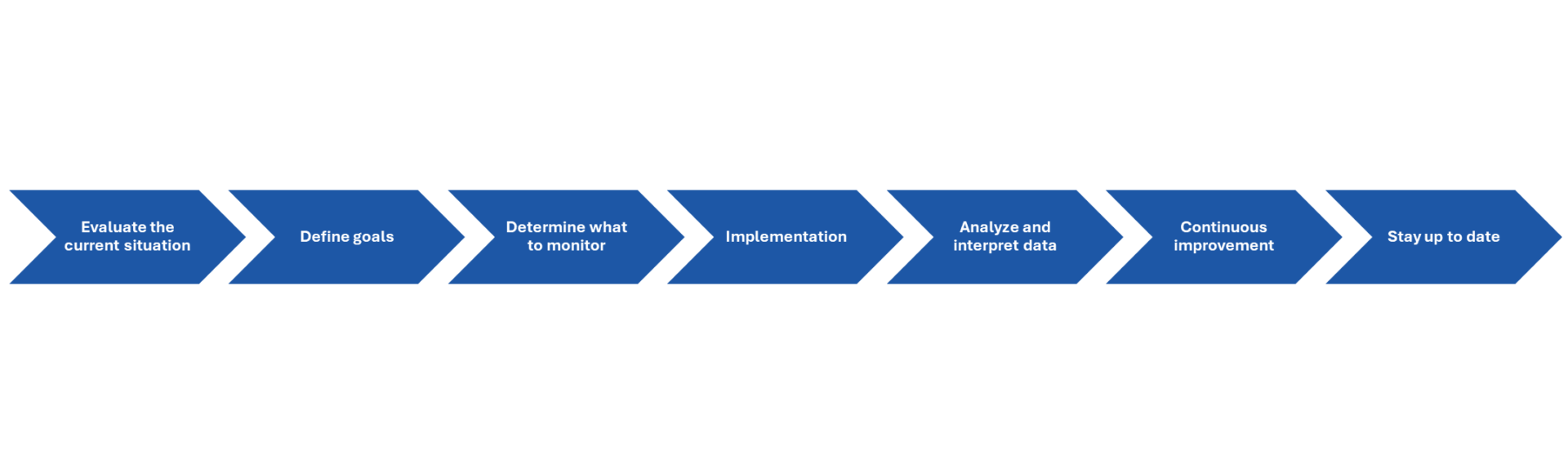
Evaluate the current situation
Who needs what monitoring data? What tools are already in place? Identify gaps and optimization potential. Analyze the landscape and stakeholders, and determine who will be affected by the monitoring process and how the data will be used. If available, evaluate existing monitoring practices and tools to understand what is already working well and where there are still gaps.
Define goals
What do you want to achieve? Is it performance, compliance, security or risk management? Monitoring should not only collect IT data, but also support key business processes.
Determine what you want to achieve through monitoring – identifying problems, improving performance, compliance or risk management. Don’t just focus on technical system metrics, but align your monitoring efforts with the priority of your business processes within the organization.
Determine what to monitor
Which systems and processes are critical? Choose meaningful metrics that provide actionable insights rather than just data overload.
From the identified systems and objectives, select the most important systems and processes to monitor, focusing on the most relevant metrics that provide actionable insights into the performance and health of your services and systems.
Implementation
Research and select monitoring tools that can collect and analyze data quickly and easily. For SAP-centric landscapes, SAP Cloud ALM is the ideal tool because it supports a variety of SAP products – cloud services and on-prem systems. Connect your systems agent-less and activate the various use cases available.
Analyze and interpret data
After the first round of data collection, you should evaluate the collected data based on your KPIs and objectives. Determine the normal operating ranges for your selected metrics and set a baseline. Based on this, you can set up thresholds, alerts and notifications.
Continuous improvement
IT systems continue to evolve – so should your monitoring. Think of monitoring as a living framework. Perform regular reviews to assess the relevance of current metrics and thresholds. Check whether monitoring is still aligned with business priorities after major system changes, such as upgrades or the introduction of new features. Ideally, the topic of “monitoring” should already be part of projects or enhancements so that monitoring is already active from day 1 after their introduction.
Conversely, the same applies to the monitored systems: Use the insights from the monitoring data to make continuous improvements to your systems.
Stay up to date
Train your team and managers so that they can make optimal use of new monitoring features and functions. Monitoring is a dynamic process that requires continuous development.
Why monitoring with SAP Cloud ALM is indispensable for “operational excellence”
SAP Cloud ALM is much more than a simple monitoring tool. It not only enables you to monitor your IT systems, but also to control the entire SAP operations and pave the way for operational excellence.
The capabilities of SAP Cloud ALM enable you to go beyond pure technical monitoring and to monitor relevant “business-critical” and application-related metrics to ensure that business processes are working. With its ability to integrate into hybrid landscapes, along with intelligent automation and transparent reporting capabilities, it is becoming an indispensable resource for any head of an SAP competence center or anyone responsible for SAP operations.
By integrating SAP Cloud ALM into your monitoring strategy, your team can ensure a resilient, efficient IT environment that supports the growth and long-term stability of your business.
Leverage blue.works’ proven expertise
Implementing an effective monitoring strategy in SAP Cloud ALM requires not only technical knowledge but also practical experience and a deep understanding of best practices. At blue.works, we bring the expertise gained from numerous successful SAP Cloud ALM projects to help companies develop and implement monitoring concepts that deliver real business value.
We can create a tailored, proven alerting and monitoring approach within SAP Cloud ALM that is customized to your specific needs and ensures that your systems remain optimized and resilient. Contact us to discuss how we can support you on your SAP Cloud ALM journey.
