

Next-gen SAP operations: SAP Cloud ALM for the operation of hybrid “Rise with SAP” landscapes in action
Next-gen SAP Operations: Navigating the complexity of the hybrid future with SAP Cloud ALM
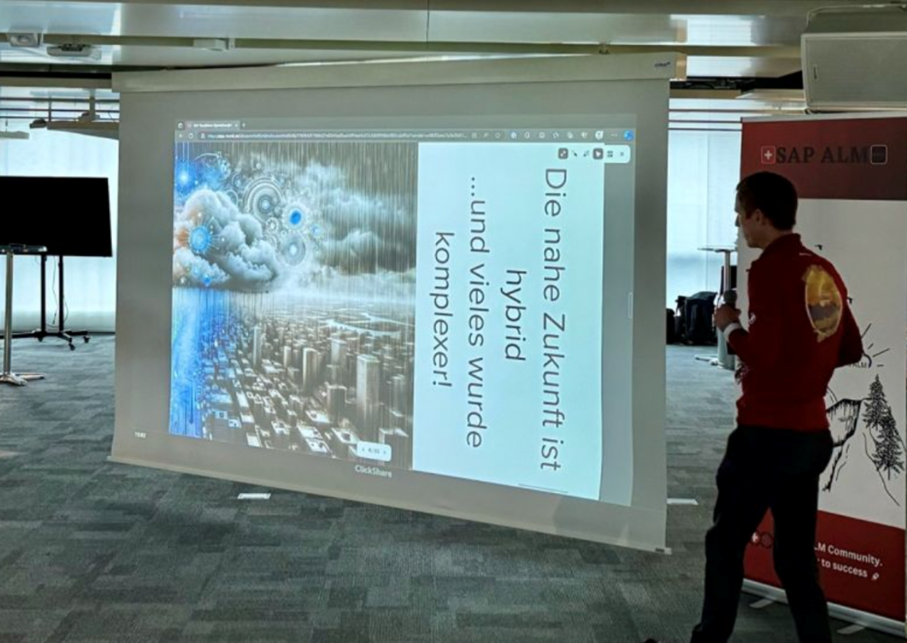
“The future is cloud ☁️…and many things became easier!” – but things turned out differently and “the near future is hybrid…and many things became more complex!”. These words served as the hook for our presentation at the DSAG (Switzerland) SAP ALM Roadshow at the end of last year, where we shared our progress in dealing with the complexity of hybrid SAP landscapes.
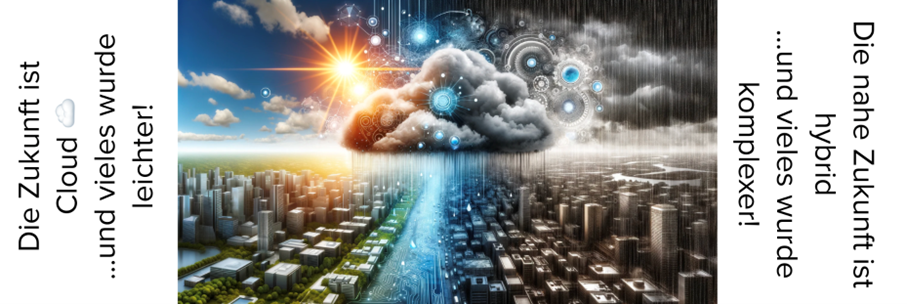
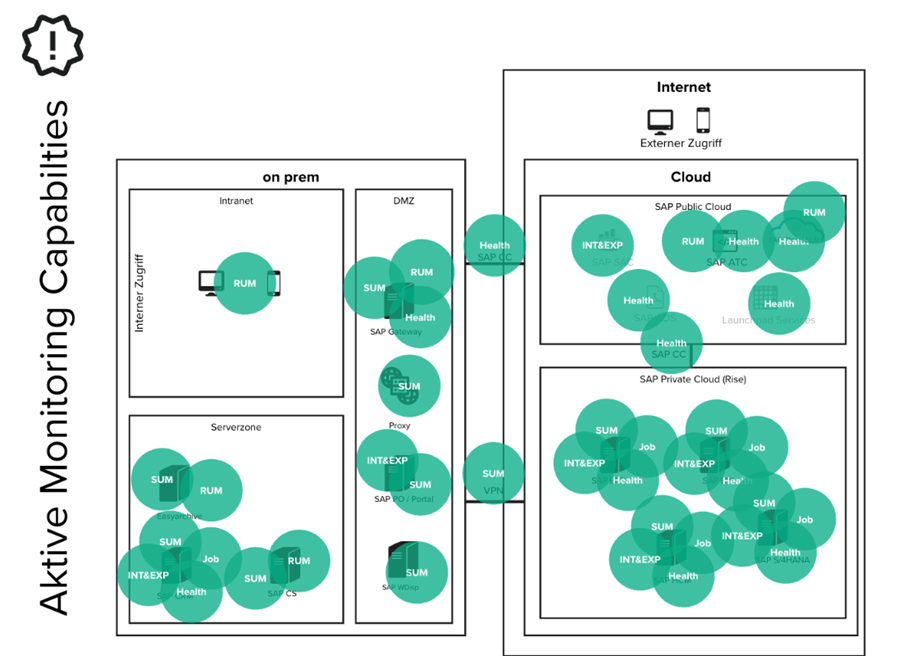
In our session “Next-gen SAP Operations: SAP Cloud ALM for operating hybrid SAP landscapes in action”, we addressed the emerging issues and hurdles associated with the transition from an on-premise system landscape to a hybrid SAP landscape: The combination of on-premise systems, SAP Public Cloud and SAP Private Cloud (Rise with SAP) systems creates a complex system architecture that requires well thought-out management and monitoring strategies.
To create transparency and maintain an overview, we use the various SAP Cloud ALM operating scenarios, which can master the challenge of hybrid system management:
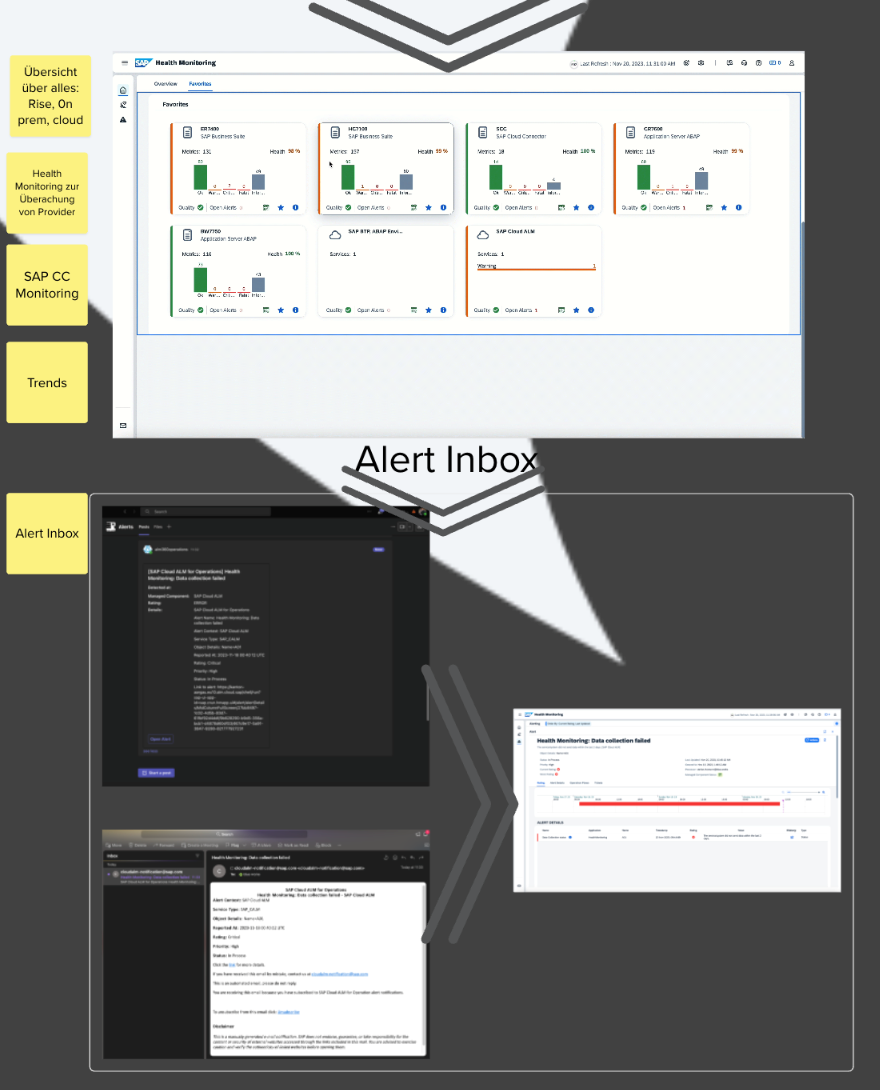
- Health Monitoring: This scenario is the technical backbone. We used real-life examples to show how SAP Cloud ALM optimizes technical monitoring by not only providing up-to-date performance data, but also providing great analytics to anticipate potential problems. The ability to be notified in real time as soon as critical system events occur means that the IT department can be proactive rather than reactive. We also showed that even inconspicuous but very important services, such as the SAP Cloud Connector, can be quickly and easily included in health monitoring.
- Job monitoring: In this area, we demonstrated how the monitoring of batch jobs and automated processes works seamlessly in a hybrid environment. We explained how notifications of job delays or aborts can be forwarded directly to the relevant teams, resulting in a significant reduction in downtime and very timely problem handling.
- Integration & Exception Monitoring: Here we presented how SAP Cloud ALM enables seamless monitoring of the integration layers and the handling of exceptions. This scenario is crucial for companies to ensure that data flows smoothly between different systems and platforms and that difficulties are detected at an early stage.
- Real User Monitoring: The importance of our “end customers”, the users, cannot be overestimated. We showed how SAP Cloud ALM provides deep insights into performance from an end-user perspective by collecting and analyzing data such as response times and resource usage.
- Business Service Management: SAP Cloud ALM gives companies a holistic view of the status of their business services. We discussed how the tool helps to monitor compliance with SLAs, simplify the planning of maintenance windows and, not to forget, make SAP Cloud maintenance completely transparent in an IT calendar.
- Configuration and Security Analysis (CSA): Compliance with security and configuration standards is becoming more and more important every day. It is not a question of “if” you will fall victim to a cyber attack, but “when” and “how” you can minimize the damage. We explained how SAP Cloud ALM helps companies to keep their system configurations up to date and thus minimize security risks.
- Synthetic User Monitoring (SUM): Finally, we looked at how SUM monitors critical business processes from the perspective of a synthetic end user. This allows us to make statements about availability and performance, but also to derive important trends, e.g. whether a system slows down over time.
Our insights into the monitoring concept that we have established with SAP Cloud ALM attracted particular attention. The Alert Inbox, a central feature of SAP Cloud ALM, was presented as a key element. This accelerates the ability to react to critical events. We showed how hybrid complexity could be mitigated by seamlessly integrating these alerts into tools such as Microsoft Teams, ITSM tools or directly into the stakeholder’s inbox.
The audience was particularly interested in our real use cases, which ranged from system monitoring to detailed analyses of real user monitoring. The exchange about the smooth migration from Solution Manager to SAP Cloud ALM during the “Rise with SAP” transition illustrates the potential of SAP Cloud ALM to get a grip on complexity and increase control and transparency.
The SAP ALM Roadshow provided us with an excellent opportunity not only to share our experiences, but also to initiate valuable discussions about the future of SAP system landscapes. At blue.works, we are convinced that with the right strategy and advanced tools such as SAP Cloud ALM, the hybrid future is not only manageable, but can also be a catalyst for innovation and growth.
In the meantime, another 3 months have passed and we can say that so far we have not had any system or service outages and have been able to respond proactively to alerts. We are looking forward to the development of further new features and will continue to report on their use and our experiences.
