Tag: SAP Cloud ALM

For posts relating to CALM

SAP Cloud ALM – What’s New in Week 8

SAP Cloud ALM continues to evolve with focused enhancements that deepen visibility and strengthen operational control. 

​The week 8 release brings expanded scoring and analytics in RISE with SAP Methodology, smarter readiness and data quality capabilities in SAP Business Transformation Center, and broader monitoring coverage and configuration transparency in Operations

​Together, these updates enhance insight, improve governance, and help teams manage transformation and operations with greater clarity and confidence. 

SAP Business Transformation Center Transition, Scoping, Modeling, Data Management

​The latest updates in SAP Business Transformation Center focus on strengthening transformation readiness, improving data quality transparency, and increasing automation across scoping, modeling, and data management. With enhanced system scans, smarter validation checks, and deeper analytical insights, teams can execute SAP ERP cloud transformations with greater confidence, control, and reduced manual effort. 

Improvements in the Transformation Project Overview app

​The Transformation Project Overview app has been enhanced to provide better visibility and control across all transformation phases. 

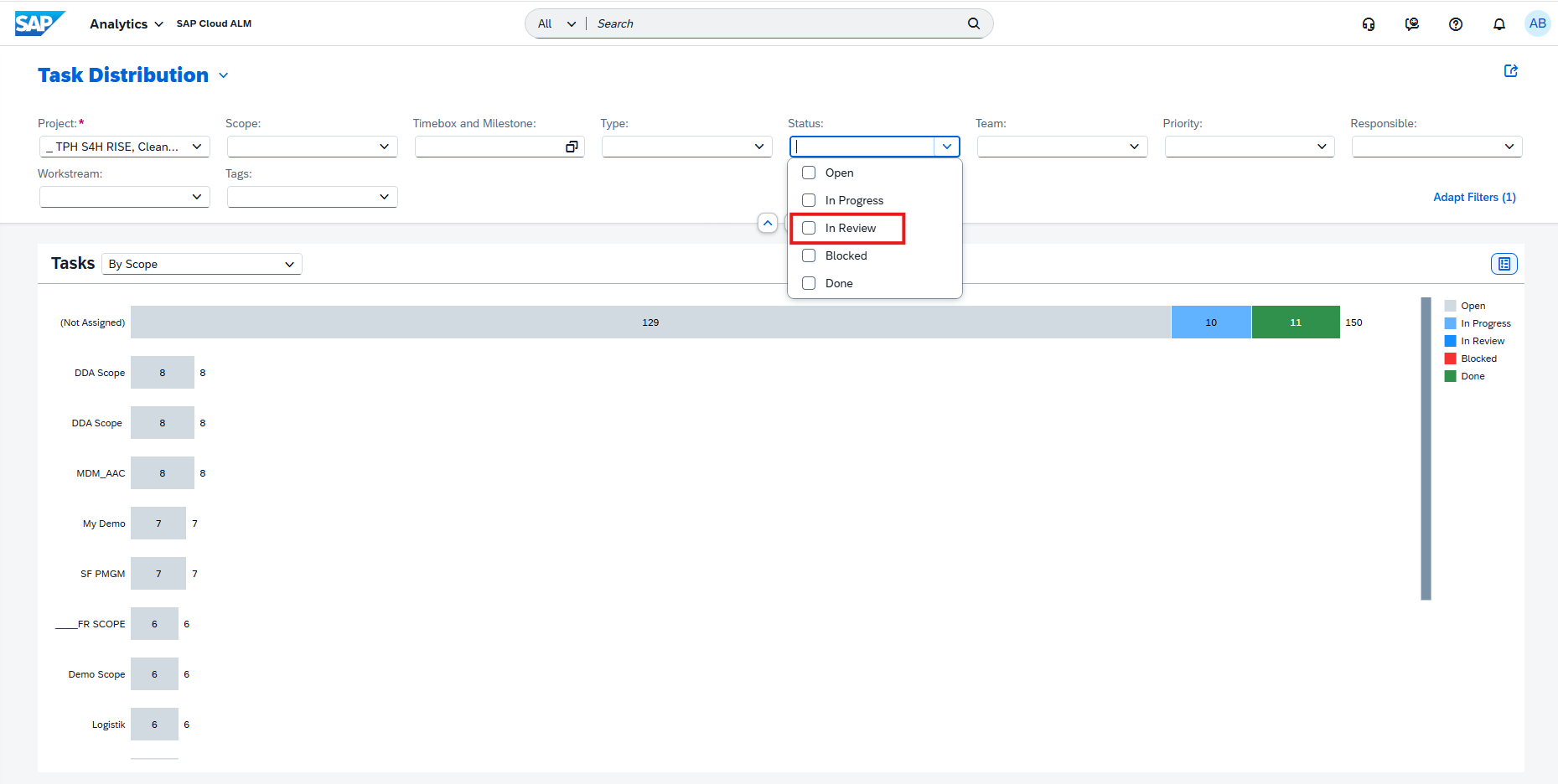
​The list of available tasks has been refined, and tasks can now be filtered by status, making it easier to focus on open or critical activities.  

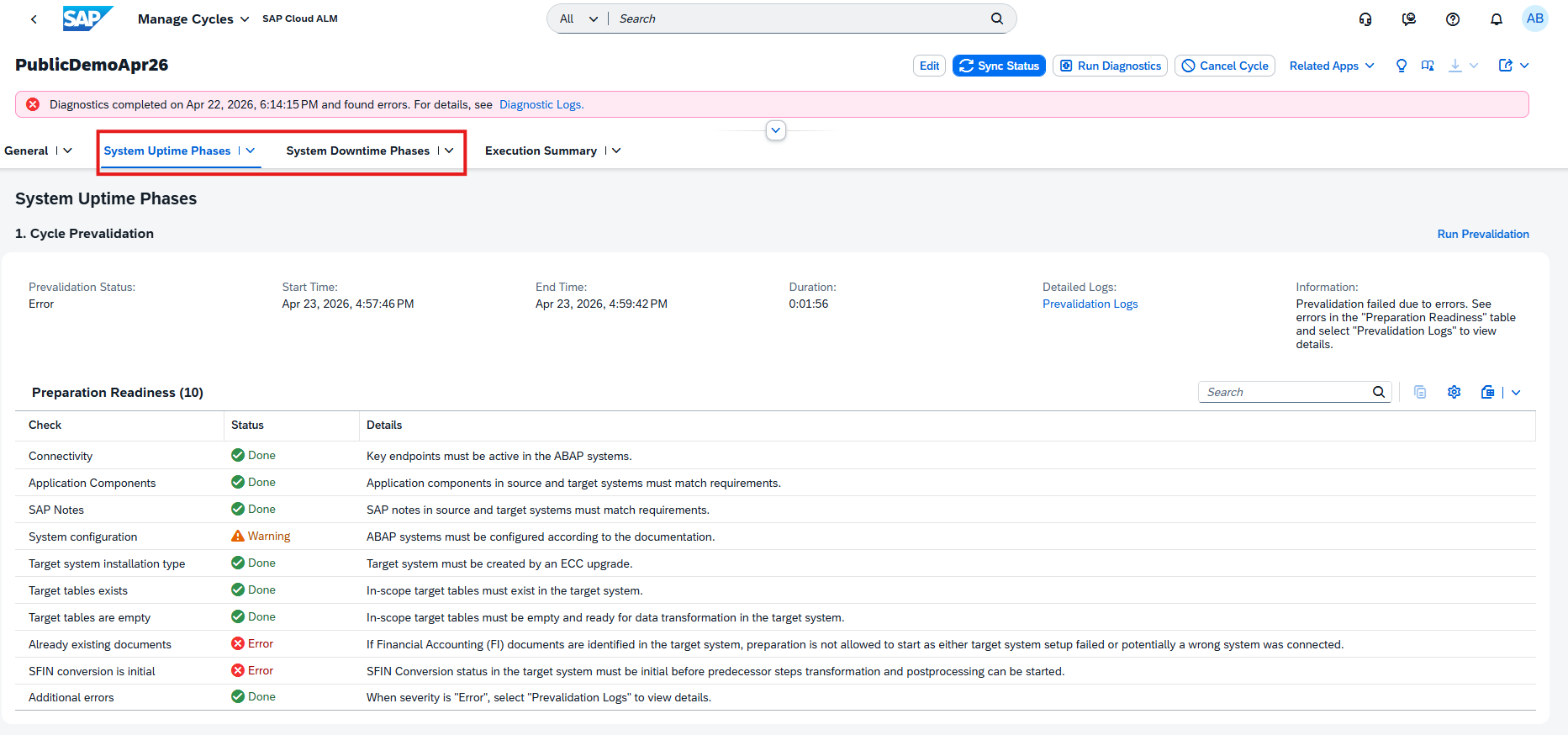
​In addition, tasks related to Scoping, Modeling, and Cycle & Monitoring can now be tracked directly within the overview, including their execution progress and current status. 

​Each relevant task also includes direct navigation links to the corresponding apps, enabling seamless transitions between the Transformation Project Overview and the Scoping, Modeling, or Cycle & Monitoring apps. 

​These improvements strengthen transparency, simplify navigation, and help teams manage transformation progress more efficiently from a central view. 

TL;DR: 

​The Transformation Project Overview app now offers refined task lists, status filtering, phase tracking, and direct navigation to related apps for better end-to-end project visibility. 

Enhanced Filter Assignments for Organizational Units and Time Slices in Scoping

​Scoping capabilities have been extended to improve precision during system scans and data selection. 

​Filter assignments for organizational unit–related table fields now include the Financial Management Area domain (FIKRS). This ensures that relevant financial management structures are properly considered during scoping and migration preparation. 

​In addition, the system scan can now detect time-slice–relevant domains, specifically GJAHR (fiscal year), in custom database tables. Based on this detection, time slice filter assignments are automatically derived, enabling data migration according to the selected fiscal year. 

​When the time slice solution pattern is activated, the fiscal year filter is automatically enabled for one relevant field in the custom table. The filter can still be adjusted or deactivated in the Select Scanned Tables app if required. 

These enhancements provide more granular scoping, better alignment with financial structures, and improved control over time-dependent data migration. 

TL;DR: 

​Scoping now supports FIKRS-based filters for organizational units and automatically derives fiscal year (GJAHR) time-slice filters for custom tables, enabling more precise and flexible data migration. 

Automatic Detection of Missing Standard Transformation Object Tables in Modeling

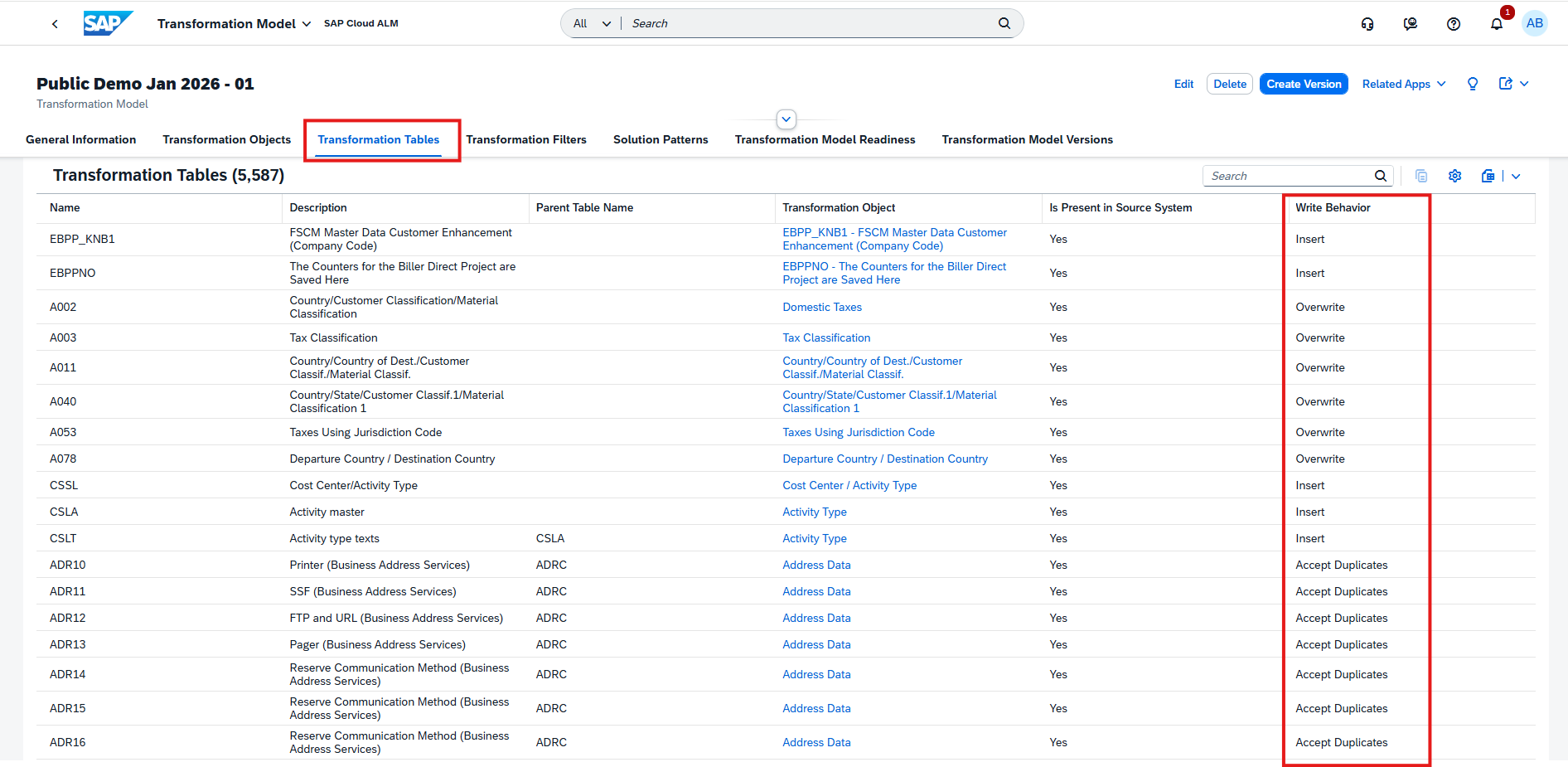
​Modeling is further improved with automatic detection and handling of missing standard transformation object tables. If tables that belong to a standard transformation object are not present in the SAP ERP source system, they are now automatically identified and excluded from the transformation model version. This also applies to related child tables, object relations, rules, and filter assignments. 

​By automatically removing non-existing elements from the model, the system helps reduce potential errors and strengthens overall data integrity during transformation. 

​This functionality is managed through the new Missing Standard Transformation Object Tables Check, available in the Manage Transformation Models app as part of the Transformation Model Readiness checks. 

TL;DR: 

​Missing standard transformation tables are now detected and automatically excluded from model versions, reducing errors and improving transformation reliability. 

Trend Analysis and Improved Cross-App Navigation in Data Management

​Data quality monitoring becomes more transparent and connected with two key enhancements in Data Management. 

​In the Analyze Data Quality app, a new trend chart is now available on the KPI Detail Page. It visualizes how the total number of errors for a selected KPI evolves across multiple successfully completed Quality Check Runs. This makes it easier to identify improvement or deterioration trends and base decisions on historical KPI development. 

In addition, navigation between apps has been streamlined. From the Manage Runs app, it is now possible to jump directly from the Run Object Page to the corresponding KPI Object Page for deeper analysis. When creating a new run or viewing an existing one, the system also displays the required ST-PI version, ensuring that all technical prerequisites for execution are clearly visible. 

TL;DR: 

​New KPI trend charts enable historical data quality analysis, while improved navigation and ST-PI version visibility simplify technical validation and cross-app analysis. 

​RISE with SAP Methodology – Operations View

​New Operations Scores

​The Operations View dashboard now includes two new scores that provide greater transparency into the operational clean core compliance of eligible systems. 

​The new Overall Operations Score represents the average clean core compliance across all eligible systems for the operations principle. The score is calculated as a weighted mean based on two area scores: 

  • ​System Health 
  • Operations Setup 

​The newly introduced Operations Setup score evaluates how well systems are configured from an operational perspective. It is based on KPIs and metrics from: 

  • ​Health Monitoring 
  • Exception Monitoring 
  • Integration Monitoring 
  • Job & Automation Monitoring 
  • Configuration & Security Analysis 
  • Real User Monitoring 
  • Business Service Management 
  • Business Process Monitoring 

​For a detailed breakdown, select a system under the Eligible Systems tab to open the Operation Details view and review the contributing metrics. 

TL;DR: 

​The Operations View now includes an Overall Operations Score and a new Operations Setup score, providing clearer insight into clean core compliance and operational readiness across eligible systems.​ 

Operations – Integration & Exception Monitoring, Job & Automation Monitoring, Operation Automation

The latest Operations updates enhance transparency across system integrations, automation, and monitoring. With improved connection insights, expanded message monitoring support, refined data management settings, and additional clean-up capabilities, teams gain better visibility, stronger control, and more efficient landscape governance across complex environments. 
Flow Discovery and Extended Product Support in Integration & Exception Monitoring

Integration & Exception Monitoring continues to expand both transparency and product coverage. 

With Flow Discovery, connections between managed services and systems can now be identified automatically. When enabled, the feature correlates messages across components, detects system-to-system relationships, and logs this information for reuse by other SAP solutions. 

Currently, Flow Discovery is supported in combination with SAP LeanIX. 

In addition, monitoring coverage has been extended with support for: 

  • Commodity Expense Management – Monitor SAP Expense Management messages with detailed status overviews and drill-down capabilities. 
  • SAP Digital Currency Hub – Gain visibility into incoming and outgoing messages, including detailed message-level insights. 

These enhancements strengthen landscape transparency while expanding monitoring coverage for key business solutions. 

TL;DR: 

Flow Discovery reveals system connections across the landscape, while new monitoring support for Commodity Expense Management and SAP Digital Currency Hub extends integration visibility. 

Enhanced Application Settings Transparency in Job & Automation Monitoring

The Application Settings in the Configuration menu have been enhanced to provide clearer visibility into data volume and retention settings. 

In the Data Volume section, the app now displays: 

  • Raw Data size 
  • Aggregated Data (Hourly) size 

Total Memory Size 

In the Data Retention Time section, the following values are now shown: 

  • Retention Time for Raw Data 
  • Retention Time for Hourly Data 
  • Retention Time for Alerts 

Please note that regardless of the configured retention time for raw data, 15 job instances (and up to 100 alerted job instances) are always stored. 

These updates improve transparency around storage usage and retention policies, helping administrators manage monitoring data more effectively. 

TL;DR: 

Application Settings now provide clearer insight into data volume and retention times, with defined minimum storage rules for job instances. 

Clean-Up Option in Landscape Management

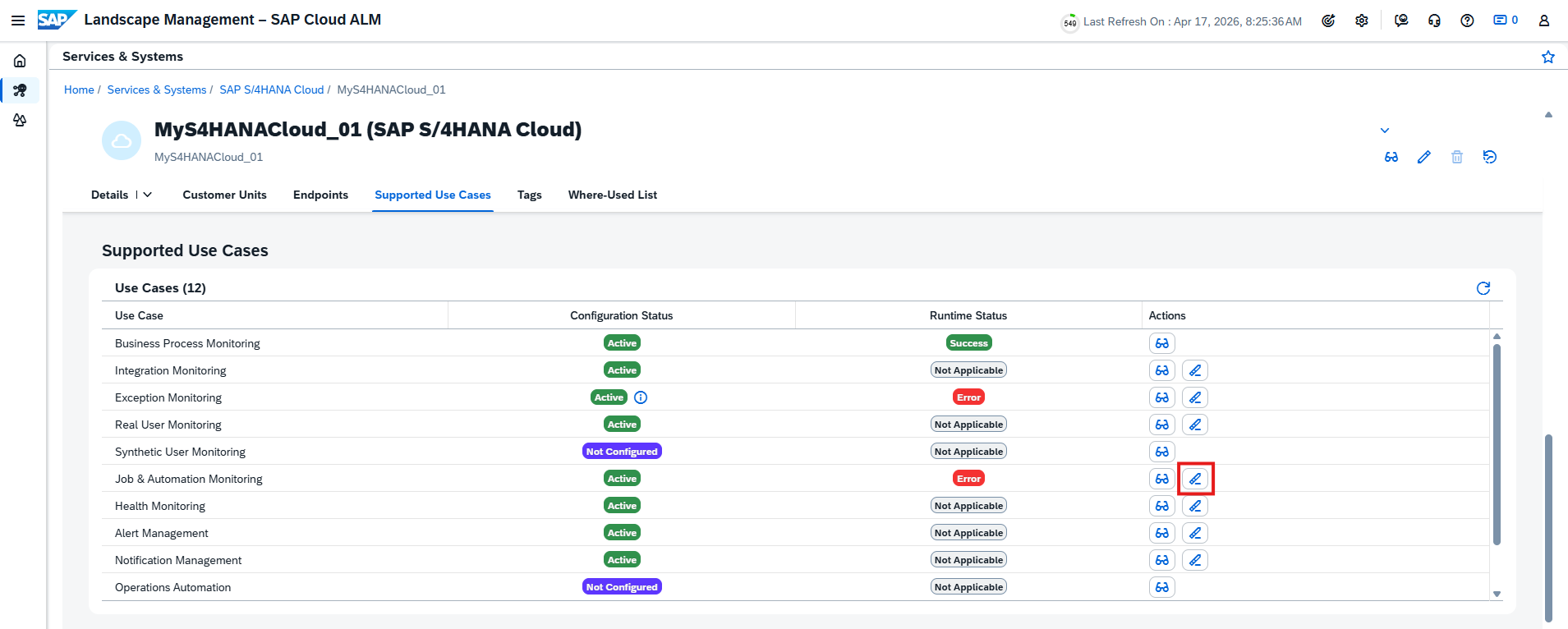
A new clean-up option is now available for Operations Automation in the Landscape Management app. 

Using the Clean-Up option in the Actions column under Services/Systems – Supported Use Cases, administrators can delete the Operations Automation configuration and all related data for a selected service or system. 

After clean-up: 

  • The Operations Automation configuration is removed 
  • Collected data is deleted 
  • The service or system moves to a Not Configured state 

This helps maintain a lean monitoring setup and remove obsolete configurations when services or systems are no longer required. 

TL;DR: 

Operations Automation settings and data can now be cleaned up directly in Landscape Management to keep configurations streamlined. 

SAP Cloud ALM – What’s New in Week 6 

​SAP Cloud ALM continues to evolve with focused updates that strengthen transparency and operational insight. 

​Week 6 release introduces enhanced monitoring and analysis in Operations, more efficient user and project management in Administration and Implementation, and practical usability improvements that simplify day-to-day work. 

​Together, these updates help teams manage complexity more effectively, reduce manual effort, and maintain better control across their SAP Cloud ALM landscape. 

SAP Business Transformation Center – Scoping 

​The latest updates in SAP Business Transformation Center continue to strengthen transparency and control during transformation preparation. With clearer system scan insights and improved visibility into source data structures, teams can make more informed scoping decisions and reduce surprises later in the migration journey. 

​System scan results now includes client-dependent tables and client-independent custom tables

​The latest update in the Scoping area of SAP Business Transformation Center improves transparency during system analysis by extending the scope of system scan results. 

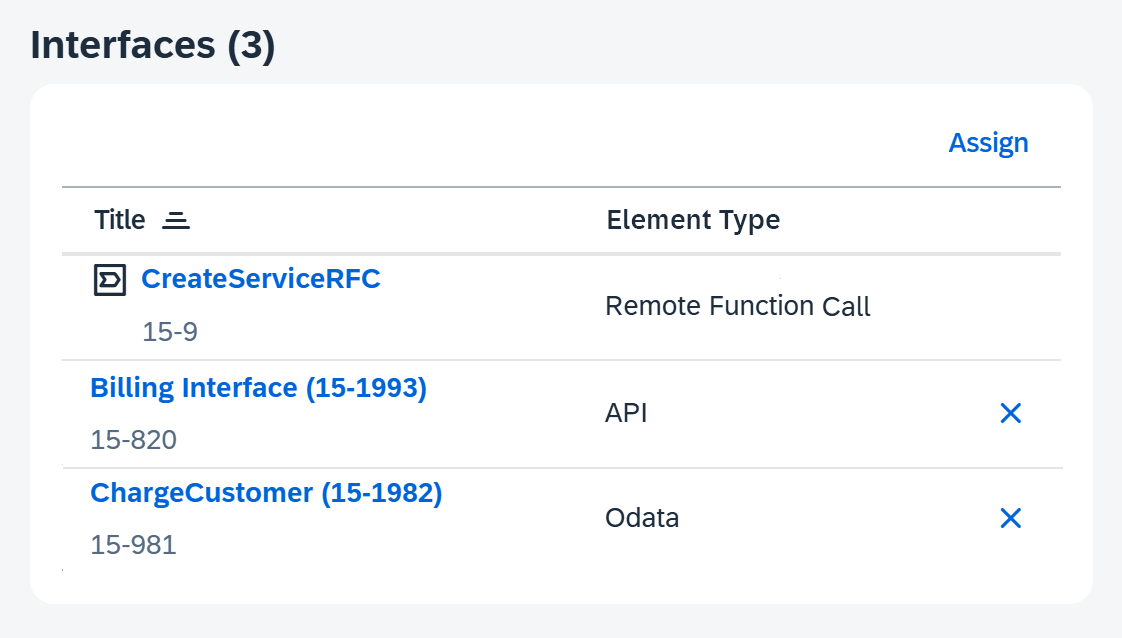
​With this enhancement, system scans now include both client-dependent tables and client-independent custom tables in a single, consolidated view. This gives transformation teams a more complete picture of the SAP ERP source system early in the scoping phase, helping them better understand the overall data footprint. 

​Client-dependent tables continue to support scoping decisions and can be reviewed and adjusted in the Select Scanned Tables app as before. In addition, a new tab now displays client-independent custom tables (for example, Z*, Y*, or custom namespaces). These tables are shown for informational purposes only and cannot be scoped, as they are currently not covered by the Lean Selective Data Transition scenario from SAP ERP to SAP S/4HANA. 

​By clearly separating client-dependent and client-independent tables, the system scan helps teams identify custom tables that may require special handling. While client-independent custom tables are not included in the standard migration scope, their visibility allows teams to proactively assess whether they are needed in the target system and plan alternative transfer approaches if required. 
TL;DR: 

​System scans now show both client-dependent and client-independent custom tables, giving a complete overview of the source system while clearly indicating which tables are scoping-relevant and which are informational only.​ 

Operations – Health Monitoring, Integration & Exception Monitoring, Business Process Monitoring 

The latest updates in the Operations area focus on greater transparency, smarter monitoring, and better control of system resources. Enhancements across monitoring apps make it easier to understand what is being monitored, how systems and services are consuming resources, and where attention is needed – helping operations teams act faster and manage complex landscapes more efficiently. 

New RFC metrics available in Health Monitoring 

Health Monitoring has been extended with comprehensive RFC metrics, giving operations teams deeper insight into remote communication and background processing health. 

The update introduces monitoring for tRFCqRFC, and bgRFC, allowing teams to track transactional, queued, and background RFC calls more effectively. 

In addition, a new RFC Connectivity Status metric provides visibility into the availability of RFC destinations, helping to quickly detect and troubleshoot communication issues between systems. The RFC connectivity metric also comes with configurable options, making it possible to tailor monitoring to specific operational requirements and critical connections. 

RFC monitoring capabilities are available only when ST-PI 740 SP33 is installed. 

TL;DR: 

Health Monitoring now supports detailed RFC metrics (tRFC, qRFC, bgRFC) and RFC connectivity status, improving visibility into system communication and background processing. 
Support for SAP Complaint Handling in Integration & Exception Monitoring 

Integration & Exception Monitoring has been extended to support SAP Complaint Handling, giving operations teams full visibility into complaint-related message flows. With this update, incoming and outgoing messages can be monitored across the following message types: 

  • SAP Complaint Handling Configuration Messages 
  • SAP Complaint Handling Master Data Messages 
  • SAP Complaint Handling Transactional Messages 

For each message type, a detailed status overview is available, allowing teams to quickly assess processing health. From the overview, it’s possible to drill down into individual messages to analyze errors, investigate delays, and review technical message details. As with other supported integrations, data collection is handled via SAP-Managed Connectivity, ensuring a consistent and low-effort setup. 

This enhancement helps teams proactively detect integration issues in complaint handling scenarios and respond faster when business-critical messages fail or behave unexpectedly. 

TL;DR: 

Integration & Exception Monitoring now supports SAP Complaint Handling, providing end-to-end visibility into configuration, master data, and transactional messages with drill-down capabilities for faster issue analysis. 

Improved KPI Transparency and Memory Insights in Business Process Monitoring 

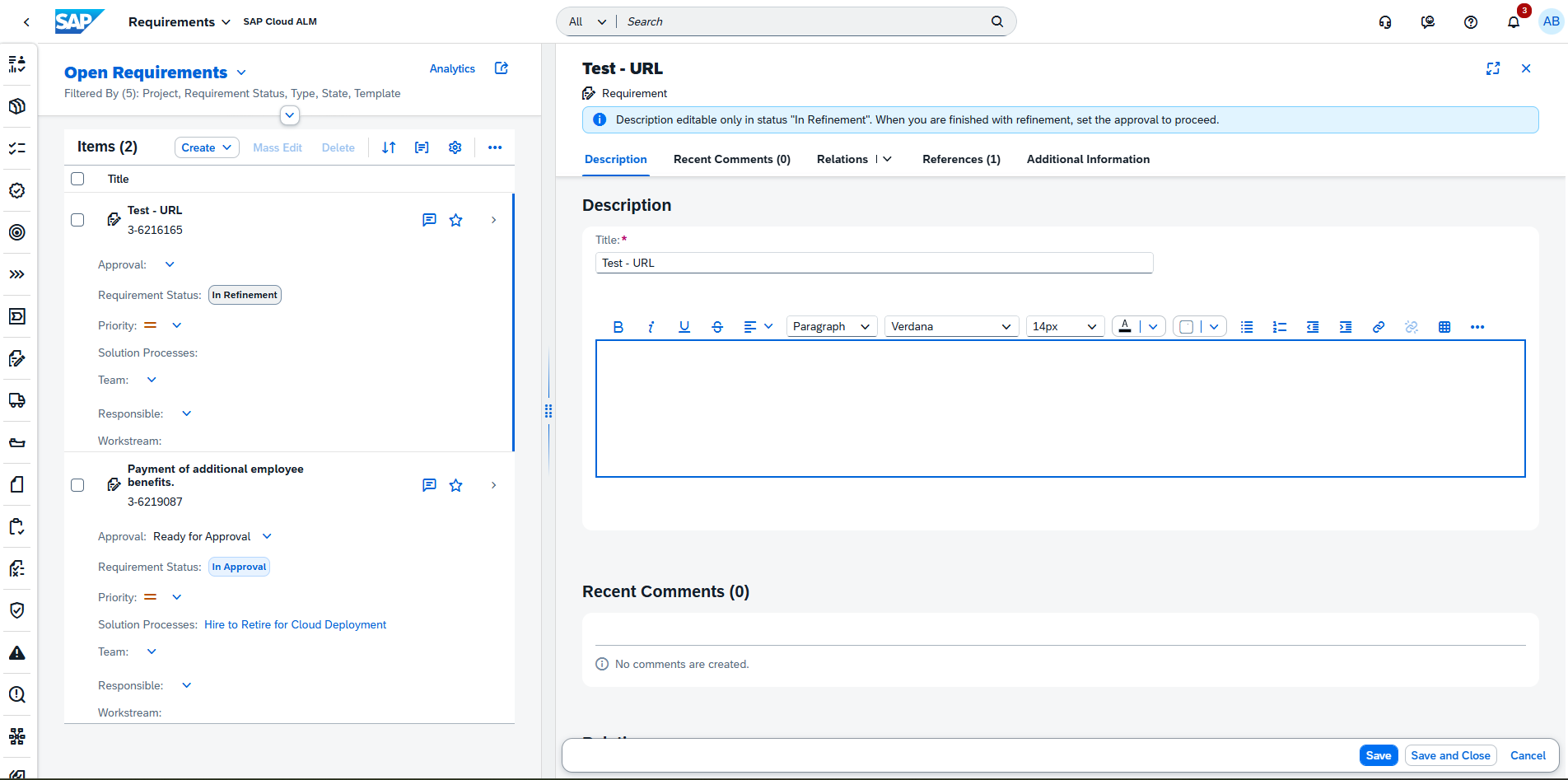
Business Process Monitoring now offers deeper transparency into how KPIs are configured and how system resources are consumed. In the configuration dialog, the Services / Systems page has been enhanced to show a complete list of all KPIs assigned to each service or system, including relevant context information and data collection details. This makes it easier to understand which KPIs are active where and why. 

In addition, Process Monitoring Administrators can now analyze memory consumption per service or system. Using the Tabular Display per Service view in the Data Volume section, it’s possible to see how memory usage is distributed across services and systems, as well as their top 10 KPIs. This insight helps teams identify KPIs with high resource consumption and fine-tune monitoring configurations accordingly. 

Together, these improvements support more informed decisions about KPI activation and data collection, helping to balance monitoring depth with efficient memory usage. 

TL;DR: 

Business Process Monitoring now shows KPIs per service/system and their memory consumption, making it easier to optimize KPI setups and manage resource usage effectively. 

Implementation – Risks, Quality Gates, Features, Analytics 

The latest updates in the Implementation area focus on giving teams more control, better insight, and greater efficiency throughout project execution. From improved analytics and reporting, to enhanced risk, quality gate, and transport handling, these enhancements reduce manual effort and make it easier to manage complex projects with confidence and transparency. 

Enhanced Risk Management 

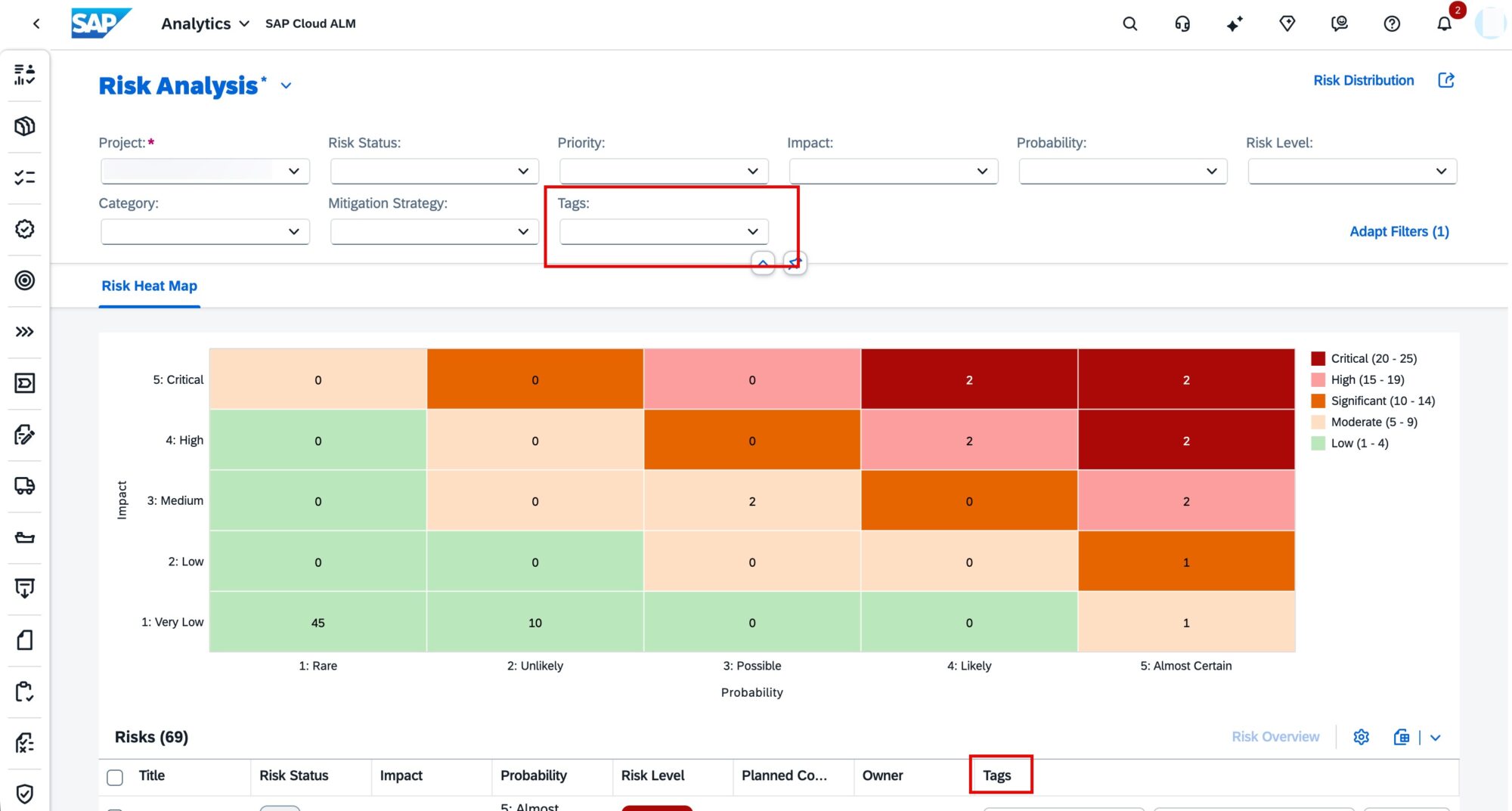
Risk handling in SAP Cloud ALM is now more tightly integrated with project execution. The Risks app has been extended with new capabilities that help teams actively mitigate risks and work more efficiently at scale. 

Project managers can now create new project tasks or assign existing ones directly from a risk, making it easier to translate identified risks into concrete actions and follow-ups without switching apps. This strengthens the link between risk identification and execution. 

 In addition, the Risks app now supports downloading and uploading spreadsheets. This enables mass editing, offline analysis, and easier collaboration when working with larger risk registers or during preparation and review phases. 

TL;DR: 

Create and assign project tasks directly from risks and manage risks at scale using spreadsheet download and upload for faster analysis and updates. 

Quality Gates: Faster Analysis, Mass Editing, and Automated Assessments 

The Quality Gates area has received several powerful enhancements that make managing checklists more efficient, scalable, and actionable – especially in larger or highly regulated projects. 

Teams can now download checklist items from dynamic quality gates into spreadsheets for offline analysis and mass editing. After updates are made, the spreadsheets can be uploaded again to create new checklist items or update existing ones. This is complemented by a new mass edit capability directly in the app, allowing multiple checklist items to be updated in one go without relying on external tools. 
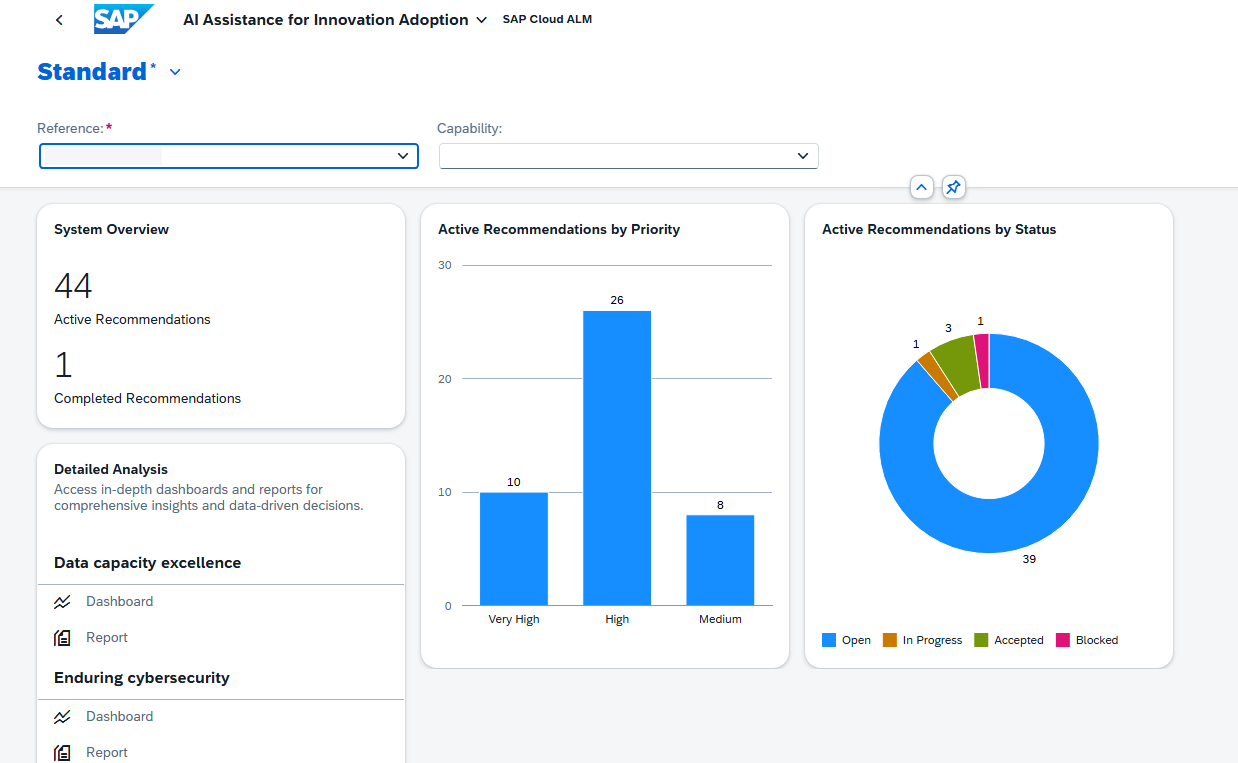
Visibility and control have also improved. In the hierarchical checklist view, project teams can now view and edit all existing checklist item attributes, including Responsible, Planned Completion, Team, User Type, and Comments. This makes it much easier to manage ownership, timelines, and accountability across quality gates. 

In addition, project leads can now request a fully automated SAP Assessment Service for selected dynamic quality gates. This is available for: 

  • SAP Activate Roadmap – SAP S/4HANA Cloud Public Edition (Prepare & Explore) 
  • SAP Activate Roadmap – SAP SuccessFactors (Prepare & Explore) 

This service helps accelerate assessments while ensuring consistency with SAP best practices. 

TL;DR: 

Quality Gates now support spreadsheet-based analysis and mass editing, full attribute maintenance in dynamic checklists, and automated SAP Assessment Services – making quality management faster, more transparent, and easier to scale. 

Features: Better Transparency in Transport Handling 

Transport handling in the Features area is now more transparent with two small but practical enhancements. 

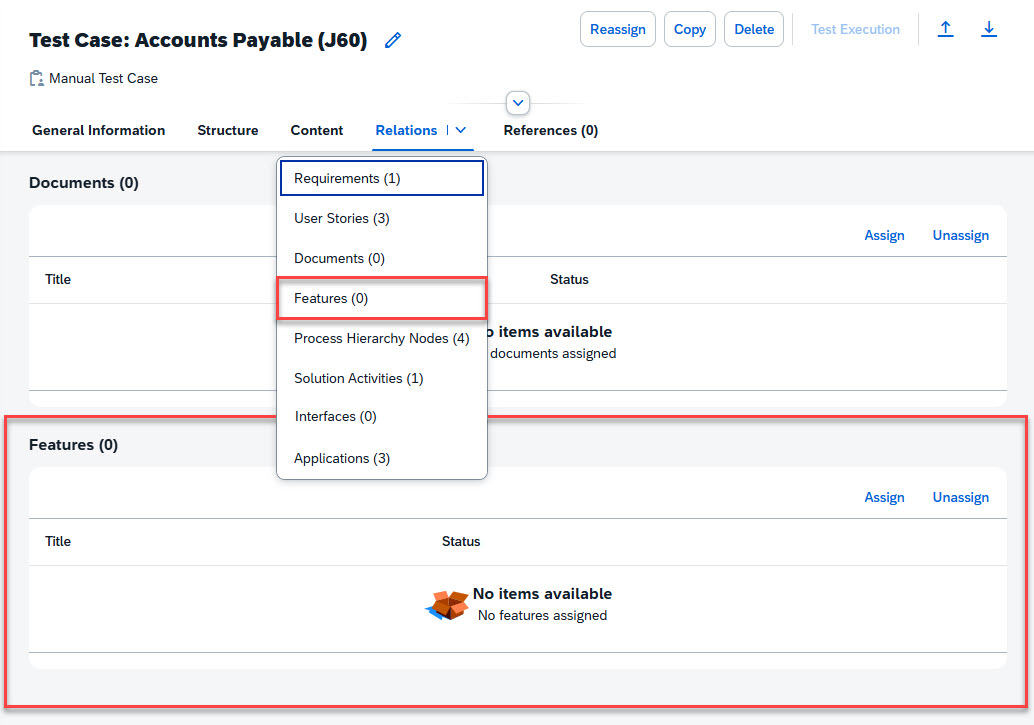
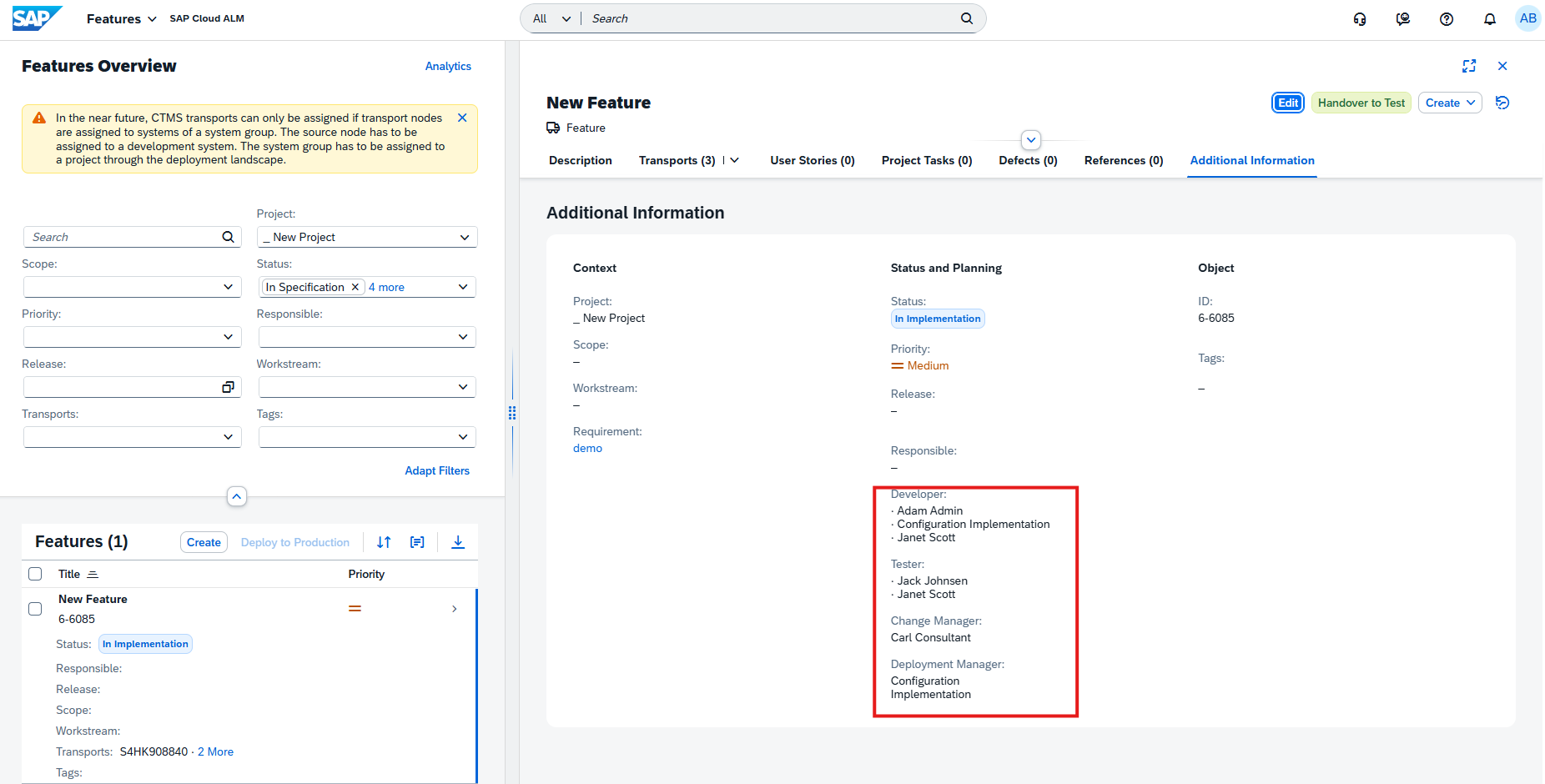
In the Transports section, the transport owner is now displayed directly. This makes it easier for project teams to quickly identify responsibility, clarify ownership, and coordinate follow-ups without switching tools or digging into transport details. 

In addition, the Create Transport of Copies dialog has been enhanced to show both the transport type and the owner. Having this context available upfront helps avoid mistakes during transport creation and supports better decision-making when selecting or reusing transports. 

Together, these improvements reduce ambiguity and make day-to-day transport management clearer and more efficient. 

TL;DR: 

Transport owner and transport type are now visible in key places, improving transparency and responsibility in transport management. 

Analytics: Smarter Search, Better Traceability, and Risk Insights 

The Analytics area in SAP Cloud ALM continues to mature with updates that make it easier to find relevant data, understand relationships, and gain clearer project insights. 

Enhanced test plan search and filtering is now available via a new Value Help dialog in the Defect Reporting app. The dialog includes a dedicated search field and a Define Conditions tab, allowing more precise filtering. For example, test cases assigned to the None test plan can be excluded by using a not equal condition. This makes defect reporting cleaner and ensures that only relevant test plans are considered during analysis. 

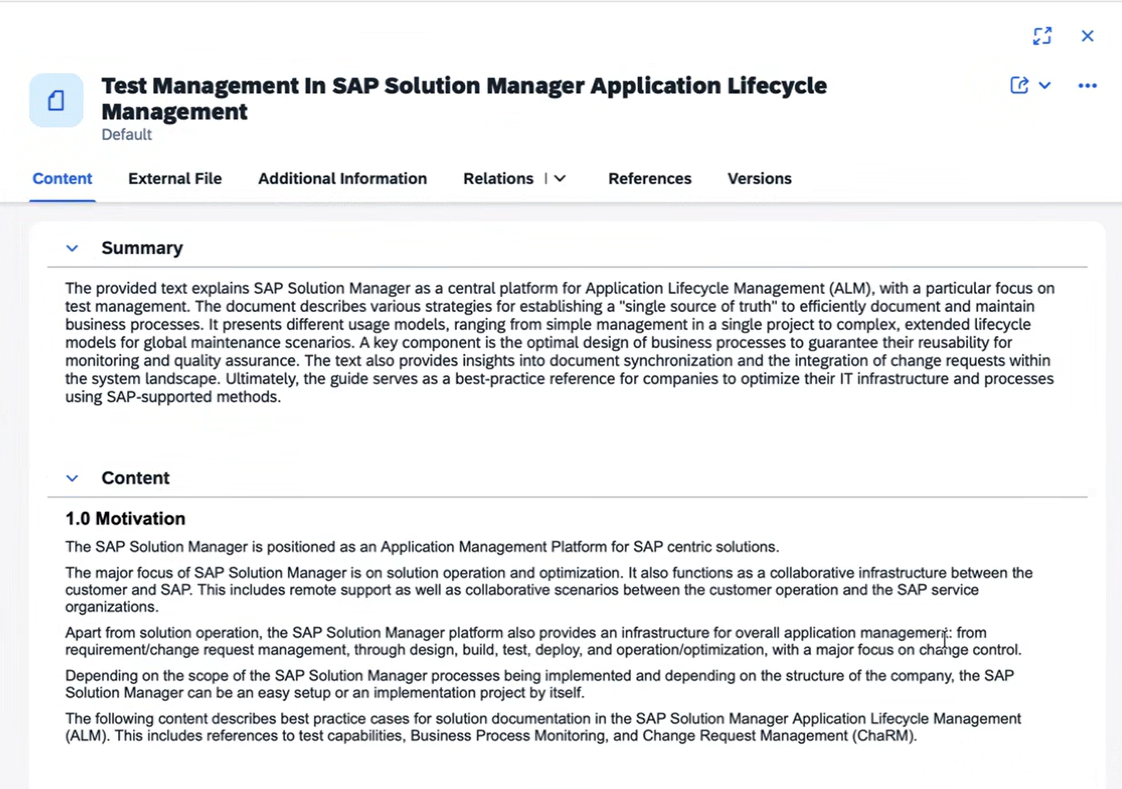
Indirect document assignments are now visible in the Solution Process Traceability app. Documents that are indirectly linked through Requirements, Tasks, Defects, or Library items can be displayed by enabling the Indirect Assignment option and switching on the Document toggle. Document counts, micro-bar charts, and direct access to document details are updated automatically, providing a more complete view of documentation coverage across processes. 

TL;DR: 

Analytics now offers improved test plan filtering, visibility of indirectly assigned documents in traceability views. 

Administration – User Management 

Mass Maintenance of Users 

User administration becomes more efficient with mass maintenance for role assignments. Administrators can now assign or remove roles for multiple users in one step directly from the Table View in the User Management app. 

This enhancement simplifies large-scale user updates and reduces repetitive manual effort when managing access across teams. 

Key points: 

  • Assign or unassign roles for multiple users at once 
  • Up to 50 users can be edited in a single action 
  • Users with the following statuses can’t be edited: 
  • Deactivated 
  • Expiring Soon 
  • Waiting for Approval (and not maintained in SAP BTP Cockpit) 

TL;DR: 

Manage user roles faster by assigning or removing roles in bulk – ideal for keeping access aligned at scale.

SAP Cloud ALM – What’s New in Week 4

SAP Cloud ALM continues into the new year with updates that focus on clarity, control, and data-driven insight.

The week 4 release introduces deeper transformation readiness in SAP Business Transformation Center, new data-focused KPIs and analysis capabilities in RISE with SAP Methodology, extended monitoring and validation options in Operations, and smarter automation and collaboration features in Implementation.

Together, these enhancements help teams make better decisions, keep systems clean and efficient, and manage transformations and operations with greater confidence and precision.

SAP Business Transformation Center – Modeling

The latest update in the SAP Business Transformation Center further strengthens data migration reliability by extending automatic checks to customer-specific standard texts. This enhancement ensures that important business content is not unintentionally left behind during transformation projects.

Automatic Detection and Migration of Customer-Specific Standard Texts

SAP Business Transformation Center now automatically detects and migrates customer-specific standard texts from the SAP ERP source system. These texts are identified via a new Unknown Standard Texts Check in the Manage Transformation Models app and are evaluated as part of the Transformation Model Readiness process.

If standard texts are found that are not part of the standard SAP ERP content, custom transformation objects are created automatically. These objects are included in the migration scope by default, but can be reviewed and explicitly included or excluded, giving teams full transparency and control before proceeding with data migration.

This check is tightly integrated into the overall Transformation Model Readiness status. A transformation model version can only be created once all readiness activities – including connectivity, unknown change documents, and unknown standard texts – are completed successfully. This prevents incomplete or inconsistent migrations and reduces the risk of rework later in the project.

TL;DR:

Customer-specific standard texts are now detected and handled automatically during transformation model readiness, ensuring no relevant texts are missed and giving teams clear control over what enters the migration scope.

RISE with SAP Methodology – System View, Customer Objects

The latest updates in the RISE with SAP Methodology area further strengthen transparency and insight into clean core adoption. With new dashboards, tabs, and deeper drill-down capabilities, teams can now move more seamlessly from high-level KPIs to detailed analyses of data efficiency and customer objects. These enhancements make it easier to assess technical debt, prioritize improvement areas, and steer systems toward long-term clean core compliance with confidence.

New Data Tab in System View

The System View dashboard in SAP Cloud ALM has been expanded with a new Data tab, adding data-focused KPIs to the clean core methodology. This update introduces the first data pillar, Data Volume Efficiency, helping teams better understand, monitor, and optimize data usage in their systems.

At the center is the Data Volume Efficiency score, which evaluates how efficiently data is managed in productive SAP S/4HANA and SAP S/4HANA Cloud Private Edition environments. The score is calculated based on several dedicated KPI cards:

  • HANA Memory
  • HANA Disk
  • Unused Data
  • Redundant Data
  • Outdated Data
  • Custom Table Footprint

By combining these KPIs, the Data tab provides a clear, consolidated view of data growth and quality. This makes it easier to identify concrete follow-up actions – such as archiving, cleanup, or data deletion – to improve system performance, reduce costs, and keep landscapes fit for innovation.

The Data Volume Efficiency score and KPIs are available only for productive systems, and all technical prerequisites must be fulfilled for the cards to display data.

TL;DR:

The new Data tab in System View adds data-related clean core KPIs, enabling better visibility into data volume, clearer optimization priorities, and improved cost and system efficiency management.

New Customer Objects App

A new Customer Objects app is now available under the RISE with SAP Methodology page on the SAP Cloud ALM launchpad. This new dashboard provides a dedicated deep dive into extensibility and clean core compliance, building on the KPIs already available in the System View.

The Customer Objects dashboard allows teams to analyze customer-specific developments in much greater detail. It complements the high-level view with object-level insights, making it easier to understand where technical debt exists and which extensions require attention. Both the Customer Objects and Referenced SAP Objects table views include key information such as:

  • Clean Core Level
  • Technical Debt Score and Technical Debt Share
  • Level B, C, and D findings
  • Classification of objects
  • Total references

This level of transparency helps development, architecture, and operations teams prioritize remediation efforts, distinguish between upgrade-stable and critical extensions, and plan modernization steps more effectively.

TL;DR:

The new Customer Objects app adds a deep-dive view on extensibility, giving detailed insight into clean core levels, technical debt, and findings for customer objects – making it easier to analyze, prioritize, and modernize extensions.

Direct Access to Customer Objects from System View

Access to the Customer Objects deep-dive dashboard is now fully integrated into the System View of SAP Cloud ALM. This enhancement makes it easier to move from high-level clean core insights directly into detailed object analysis without switching context.

From the Extensibility tab in the System View, selecting the Level B Objects, Level C Objects, or Level D Objects cards now takes you straight to the Customer Objects dashboard. The data is automatically pre-filtered for both the selected system and the chosen clean core level, enabling a smooth drill-down from overview KPIs to object-level findings.

This tighter integration supports faster analysis of technical debt and extensibility risks, helping teams quickly identify which customer objects require modernization or corrective action.

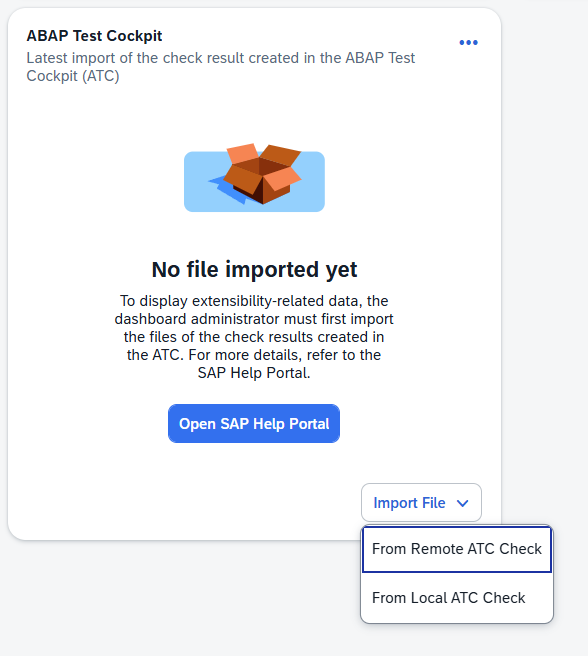
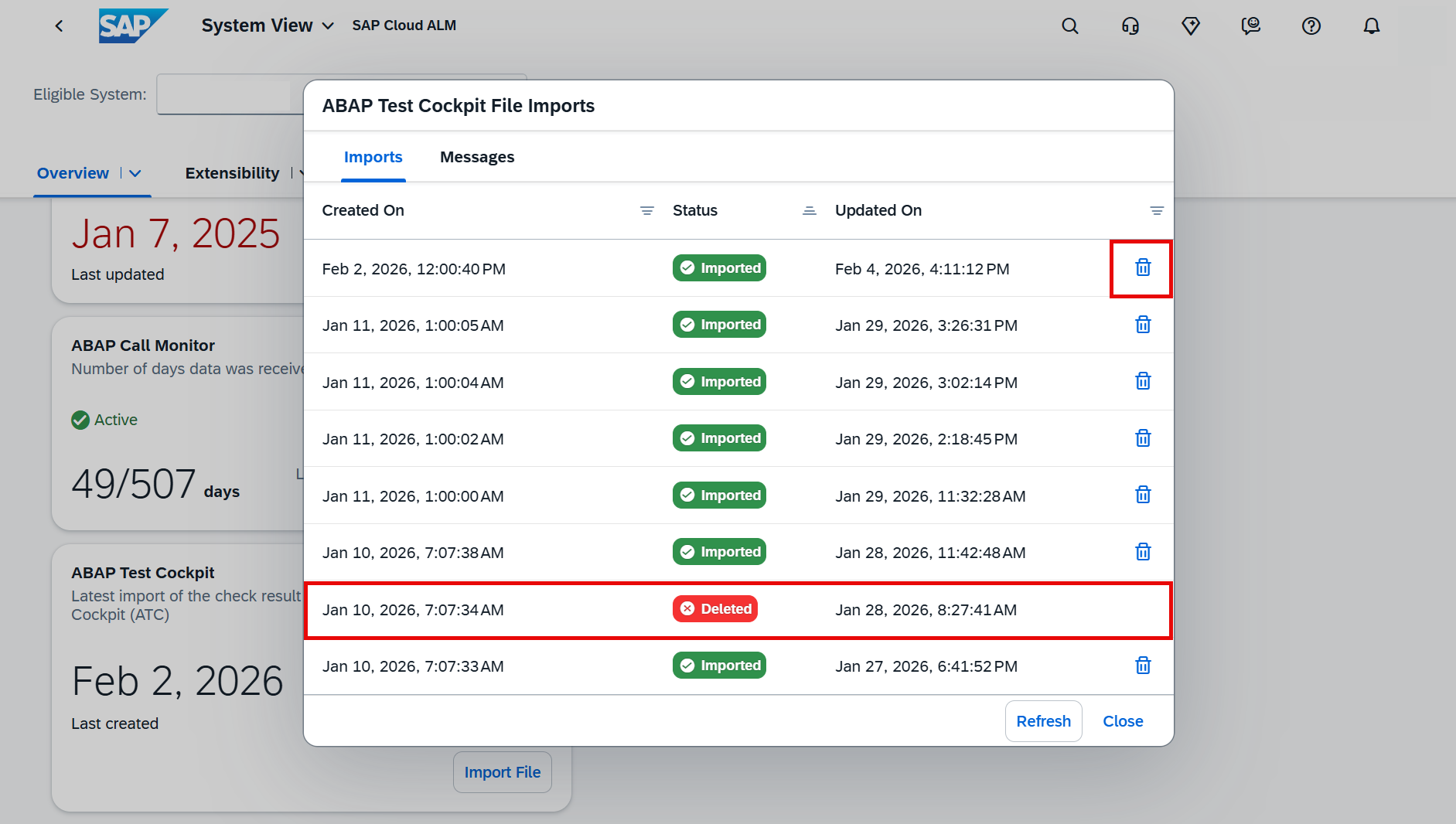
Data is only displayed if the latest ABAP Test Cockpit (ATC) check results have been imported by a dashboard administrator. Without up-to-date ATC data, the Customer Objects dashboard remains empty.

TL;DR:

The System View now links directly to the Customer Objects dashboard, enabling one-click drill-down from clean core KPIs to detailed object analysis – pre-filtered by system and clean core level.

Operations – Job & Automation Monitoring, Integration & Exception Monitoring, Business Process Monitoring

The latest updates in the Operations area focus on greater precision and control in day-to-day monitoring. Enhancements across Job & Automation Monitoring, Integration & Exception Monitoring, and Business Process Monitoring give operations teams more flexible filtering, richer analytical access, and expanded KPI coverage for industry-specific scenarios. Together, these improvements help teams detect issues faster, analyze operational behavior more effectively, and keep complex system landscapes running smoothly.

Not Contains Filter Option for Monitoring and Analysis Filters

Filtering in Job & Automation Monitoring has become more flexible. A new Not Contains condition is now available for the Executed By and Scheduled By filters in Monitoring and Analysis view.

By adding an exclamation mark (!) before a value, operations teams can explicitly exclude jobs or automations based on who executed or scheduled them. This makes it easier to narrow down results, remove noise from large job lists, and focus on the executions that actually matter for analysis or troubleshooting in SAP Cloud ALM.

For example, filtering with !ABC for Executed By and !XYZ for Scheduled By will show only those jobs that were not executed by ABC and not scheduled by XYZ.

TL;DR:

Use the new Not Contains filter to exclude specific executors or schedulers and refine job and automation analysis more precisely.

Enhanced Category Selection in Generic Integration Monitoring Analytics API

The Generic Integration Monitoring Analytics API has been enhanced to support more flexible analysis scenarios. It is now possible to select up to five categories (messageType) within a single API call. Previously, each call was limited to just one category, often requiring multiple requests to retrieve a broader view.

This improvement reduces the number of API calls needed for analytics, simplifies reporting logic, and enables more efficient aggregation of integration data across multiple message types in SAP Cloud ALM.

To ensure stable performance, the API enforces a limit: if more than five categories are selected, the request returns a 412 response.

TL;DR:

The Integration Monitoring Analytics API now supports up to five categories per call, enabling more efficient and flexible integration analytics with fewer requests.

Business Process Monitoring KPIs for Commodity Expense Management and Foreign Exchange Risk Management for commodity businesses

Business Process Monitoring has been extended with new KPIs tailored for commodity-driven scenarios, giving operations and finance teams deeper insight in SAP Cloud ALM. These KPIs help monitor execution quality, identify exceptions early, and improve control over cost and risk processes.

Commodity Expense Management – New KPIs

  • Commodity Expense Accruals Created
  • Commodity Expense Planning Objects Created
  • Commodity Expense Planning Object Items Created
  • Commodity Expense Settlements Created
  • Commodity Expense Settlement Items Created
  • Failed Commodity Expense Accruals
  • Failed Commodity Expense Settlement Items
  • Open and Reversed Commodity Expense Accruals
  • Open Commodity Expense Settlement Items

Foreign Exchange Risk Management for Commodity Businesses – New KPIs

  • Exposures Released
  • Exposures with Errors
  • Hedge Requests Canceled
  • Hedge Requests Pending Approval
  • Hedge Requests Sent for Trading
  • Hedge Requests Trade Completed
  • Open Hedge Requests

Note: These KPIs are not part of the standard end-to-end processes. To use them, first create a custom process and assign the relevant KPIs.

TL;DR:

New KPIs for commodity expense and foreign exchange risk management provide detailed visibility into accruals, settlements, exposures, and hedge activities – enabling stronger monitoring and faster issue resolution when assigned to custom processes.

Implementation – Features, Documents, Cross-Project Overview       

This week’s updates in the Implementation area focus on automation, integration, and efficiency across the project lifecycle. New APIs and workflow integrations improve how features, documents, and approvals are managed, while usability enhancements in analytics and cross-project views help teams find, filter, and act on information faster. Together, these improvements reduce manual effort and support more streamlined, scalable project execution.

Feature Status Updates via Features API

The Features API has been enhanced to allow teams to update the status of features programmatically. This enables tighter integration with external tools, automated workflows, and CI/CD pipelines, reducing the need for manual status updates in the UI.

Using the API, feature statuses can now be switched to the following states:

  • Not Planned
  • In Specification
  • In Implementation
  • In Testing
  • Successfully Tested
  • Deployed

One important exception remains: the transition from Successfully Tested to Ready for Production is intentionally excluded from the API and must still be performed directly in the Features app. This ensures an explicit review step before production readiness is confirmed.

This enhancement is particularly useful for teams aiming to automate release processes, synchronize feature status with development tools, or keep SAP Cloud ALM aligned with external delivery pipelines.

TL;DR:

The Features API now supports automated feature status updates for most lifecycle stages, enabling better integration and reduced manual effort – while keeping final production readiness under controlled review.

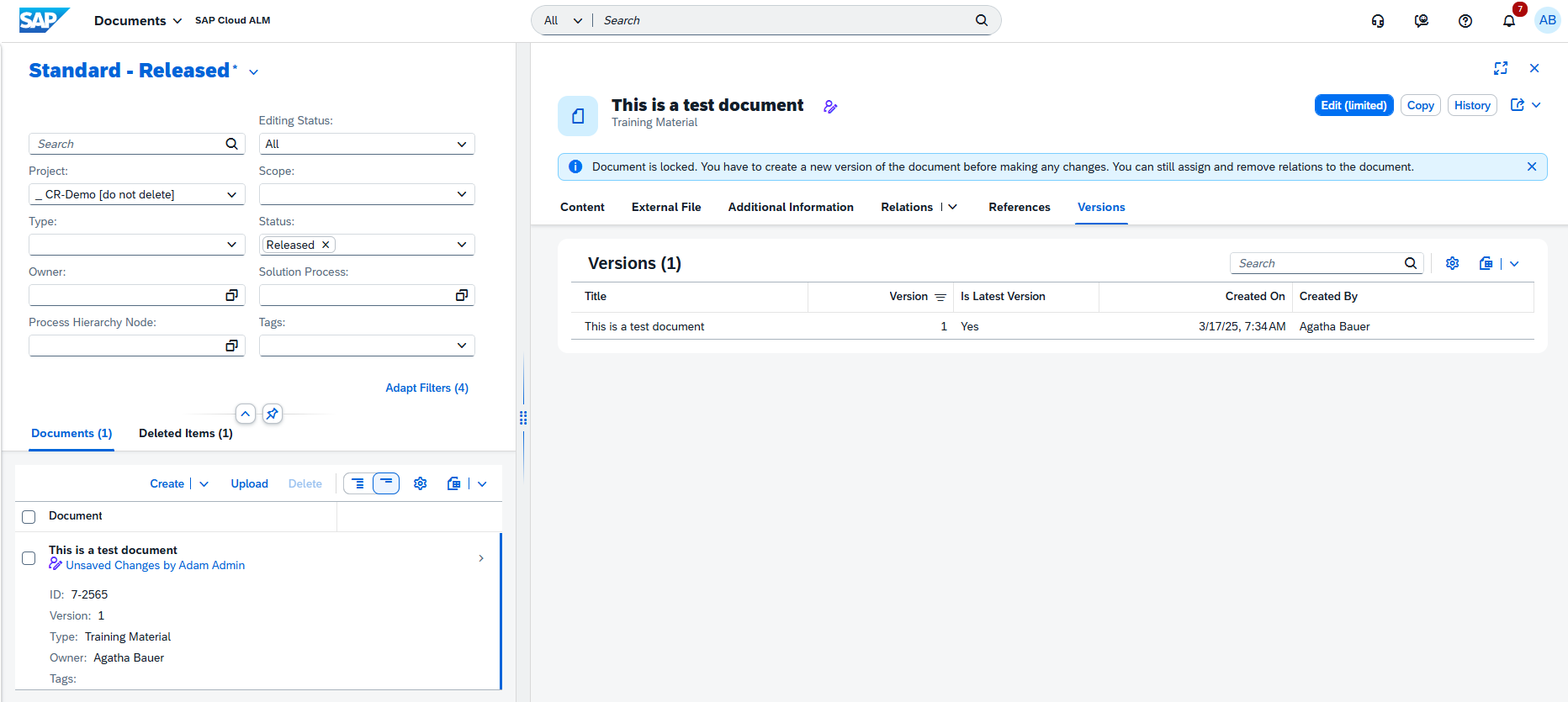
Integration of SAP Build Process Automation for External Approval Procedures in Documents

Document approvals in SAP Cloud ALM can now be extended with external workflow integration using SAP Build Process Automation. This new approval procedure allows document approval processes to run outside SAP Cloud ALM while remaining fully connected to the Documents app.

When external workflow integration is enabled, approval requests are handed over to SAP Build Process Automation, where approvers receive their tasks directly in their BPA inbox. Approval workflows can be tailored to organizational needs, including:

  • Single or multiple approvers
  • Parallel or sequential approval steps
  • Email notifications
  • Conditional logic based on document type or tags

Once the workflow is designed and deployed in SAP Build Process Automation, it can be connected back to SAP Cloud ALM and used seamlessly for document approvals.

TL;DR:

Document approvals can now be handled via SAP Build Process Automation, enabling flexible, customizable external workflows while keeping documents managed centrally in SAP Cloud ALM.

Faster Navigation in Process Hierarchy Assignment

The Process Hierarchy Assignment app now includes a search field, making it easier to work with large and complex hierarchies in SAP Cloud ALM.

Users can quickly find process hierarchy nodes by title or ID, reducing manual scrolling and speeding up cross-project assignments – especially helpful when managing extensive process structures across multiple projects.

TL;DR:

Search hierarchy nodes by title or ID in the Process Hierarchy Assignment app for quicker navigation and easier cross-project work.

Administration – Landscape Management

New clean-up option for obsolete customers and systems

Managing landscapes stays clean and accurate with a new clean-up option for obsolete customers and systems in SAP Cloud ALM. SAP Cloud ALM now automatically flags customer numbers and systems that are no longer part of the daily backend import and marks them clearly as obsolete with a red indicator in the Landscape Management tables.

This situation can occur for several reasons, such as changes to SAP Cloud ALM customer numbers, updates to customer numbers of managed cloud systems, removals from the SAP Corporate Group, or missing authorizations of the S-user used for landscape synchronization.

Using the Configuration view in Landscape Management, administrators can now permanently delete obsolete customer numbers, their related systems, and all associated assignments. In addition, individual obsolete systems can be removed selectively, provided they no longer have any active use cases. This helps keep the landscape lean, avoids confusion, and ensures that only relevant and actively used systems remain visible.

TL;DR:

Landscape Management now highlights obsolete customers and systems and allows administrators to safely delete them, keeping SAP Cloud ALM landscapes clean, accurate, and up to date.

Cross-Area Update – Increased Memory and API Data Transfer

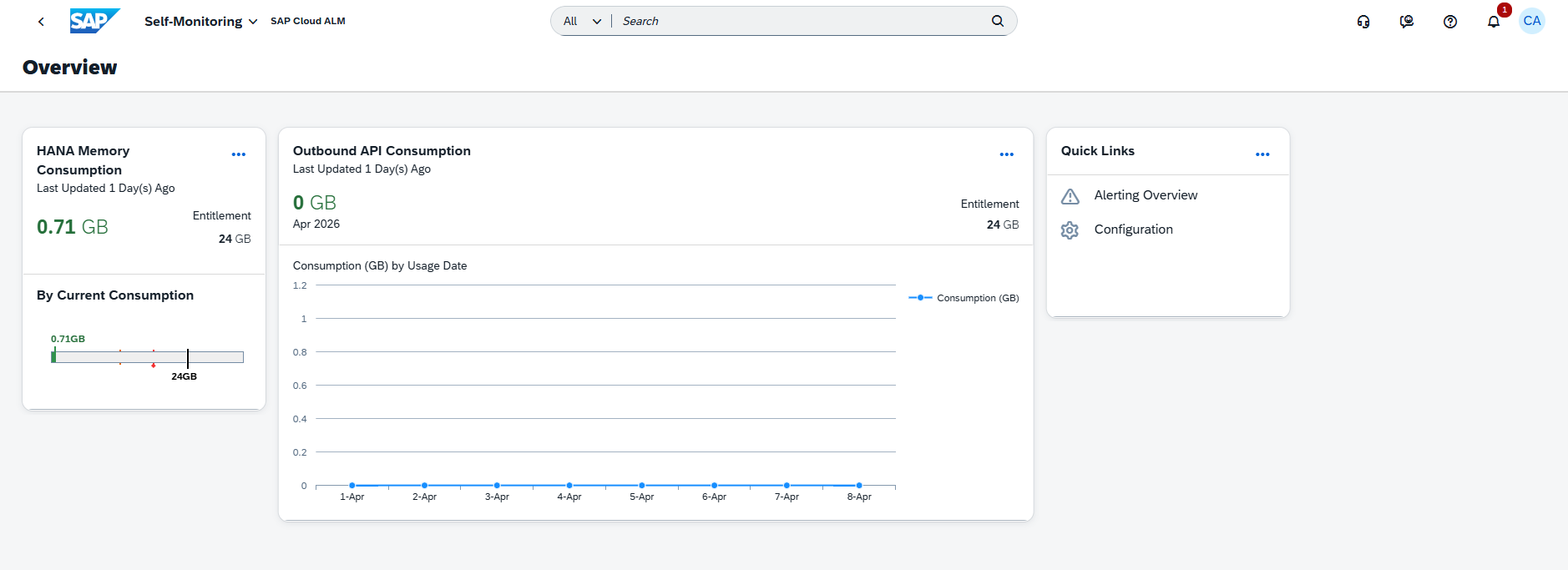
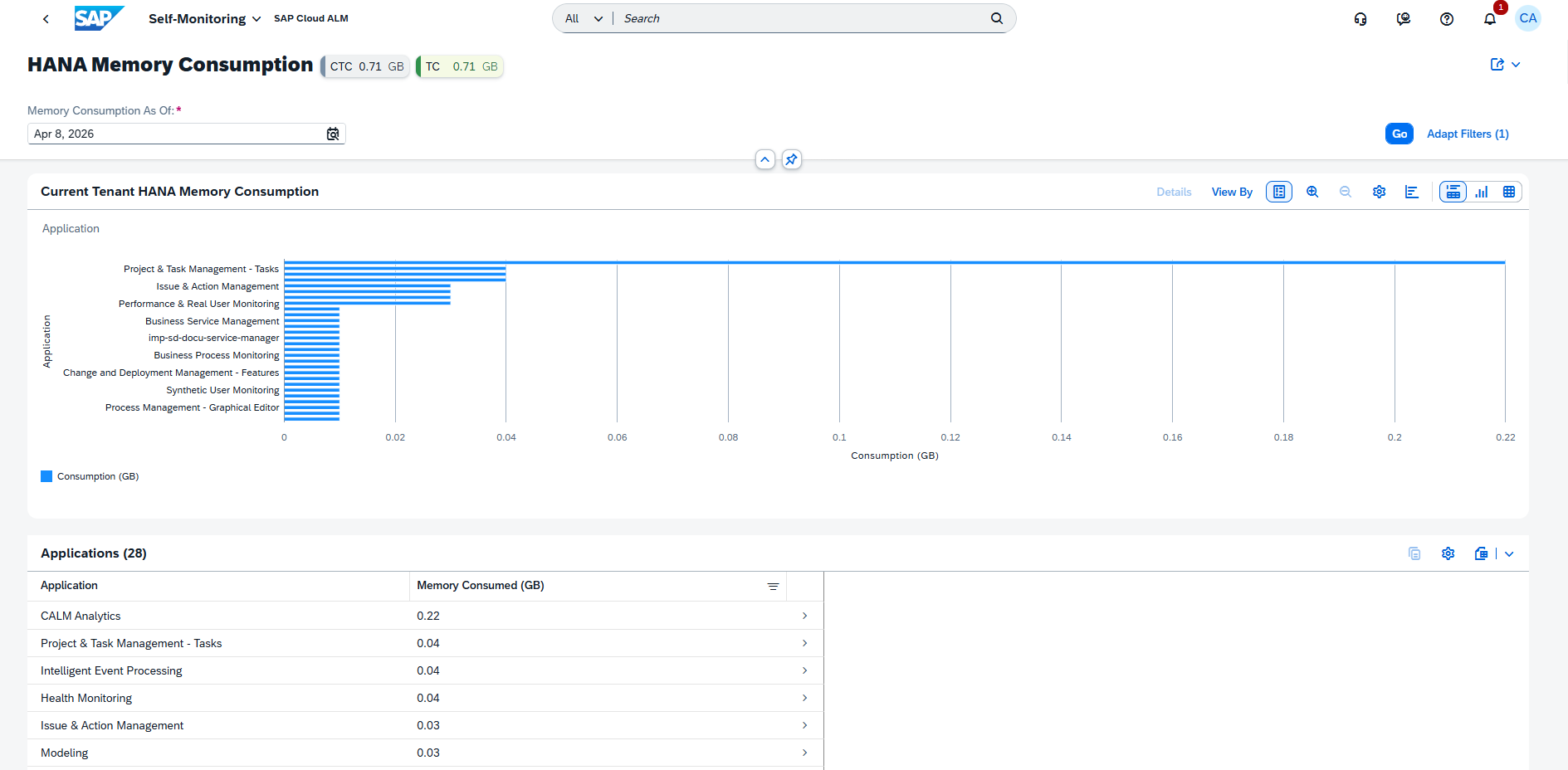
To better support larger landscapes and more advanced monitoring scenarios, SAP Cloud ALM now provides significantly increased baseline resources per tenant. The available SAP HANA memory and monthly data transfer for outbound APIs have been expanded from 8 GB to 24 GB.

This increase applies equally to:

  • Base tenants included with Enterprise Support
  • Tenants provided via the SAP Cloud ALM tenant extension

The enhancement is effective for both existing tenants and all newly provisioned tenants, ensuring immediate benefits without additional configuration. With more memory and higher data transfer limits, teams can handle larger datasets, enable richer monitoring scenarios, and integrate outbound APIs more comfortably without hitting resource constraints.

TL;DR:

SAP Cloud ALM tenants now come with 24 GB of base HANA memory and outbound API data transfer (up from 8 GB), supporting larger landscapes and more demanding monitoring use cases out of the box.

SAP Cloud ALM – What’s New in Week 3

​SAP Cloud ALM kicks off the year with focused updates that sharpen usability and strengthen operational control. The week 3 release brings refinements across Operations and Implementation, with enhancements that improve monitoring, streamline configuration and security handling, and make daily project work more flexible and transparent. 

​ ​Together, these changes help teams stay on top of complex landscapes, reduce manual effort, and work with greater confidence as projects and operations move into the new year.​ 

Operations – Integration & Exception Monitoring, Configuration & Security Analysis 

This week updates strengthens SAP Cloud ALM Operations capabilities with refinements that improve monitoring accuracy, simplify administration, and enhance day-to-day usability. The new features help operations teams gain clearer visibility, keep configurations clean, and manage complex landscapes more efficiently. 

Support for SAP Business Network – Integration & Exception Monitoring 

Integration & Exception Monitoring now supports SAP Business Network, extending visibility into message-based integrations. Operations teams can monitor both incoming and outgoing messages with a clear status overview and drill down into individual messages to analyze issues and message details. 

The necessary data is collected using SAP-Managed Connectivity, a service that simplifies and standardizes the integration of SAP cloud services without requiring customers to manage connectivity infrastructure themselves. For more details on how SAP-Managed Connectivity works and how it supports data collection in monitoring scenarios, see the official SAP Help Portal: SAP-Managed Connectivity

TL;DR: 

SAP Business Network messages can now be monitored end to end, with detailed status views and message-level drilldowns powered by SAP-managed connectivity. 

New Validation Checks for Additional SAP Services – Configuration & Security Analysis – Validation 

Configuration & Security Analysis – Validation continues to expand its coverage with new security and compliance checks added for a broad set of SAP services. These checks help operations teams assess configurations against SAP-recommended security standards and identify potential risks earlier. 

New checks are now available for the following products: 

  • SAP SuccessFactors Agent Connection 
  • SAP SuccessFactors Incentive Management 
  • SAP SuccessFactors Agent Performance Management 
  • SAP SuccessFactors Agent Lifecycle Management 
  • SAP Cloud Identity Services – Identity Provisioning 
  • SAP Mobile Services 
  • SAP HANA Cloud, data lake 
  • SAP HANA Cloud 
  • SAP Credential Store 
  • SAP Cloud Logging 
  • SAP Automation Pilot 

The new checks can be configured directly in the Configuration à Services/Systems table, just like existing validation rules. This makes it easy to extend compliance monitoring without changing established workflows. 

TL;DR: 

Configuration & Security Analysis adds new validation checks for SuccessFactors, SAP HANA Cloud, identity, logging, and automation services – expanding compliance coverage and strengthening security monitoring across the landscape. 

Usability Enhancements in the Configuration & Security Analysis – Validation App 

The Configuration & Security Analysis – Validation app has received several user interface improvements that make navigation and filtering more intuitive and efficient. 

Key enhancements include: 

  • Direct navigation to Landscape Management: Service and system names in the Services/Systems table on the Validation Overview page are now clickable links. Selecting a name takes you directly to the corresponding service or system details in the Landscape Management app. 
  • Value Help added to filters: Value help is now available for filter parameters, both in classic and visual filters, as well as in the filter section within table settings.
  • Expanded filter options: Additional parameters have been added to the Filter section of the table settings, enabling more precise refinement of validation results. 

Together, these enhancements reduce manual effort, improve discoverability, and make it faster to analyze and act on validation findings. 

TL;DR: 

The Configuration & Security Analysis – Validation app is easier to use with clickable service links, value help for filters, and expanded filtering options – speeding up navigation and analysis. 

Clean-Up Option for Configuration & Security Analysis 

Managing monitoring configurations is now simpler with a new Clean-Up option for Configuration & Security Analysis directly in the Landscape Management app. 

From the Services/Systems à Supported Use Cases section, the Clean-Up action allows administrators to fully remove Configuration & Security Analysis data for a selected service or system. When executed, the following happens: 

  • All configuration settings are removed from both the Data Stores and Validation apps 
  • All collected configuration and validation data is deleted 
  • The service or system is reset to a Not Configured state 

This feature is particularly useful when decommissioning systems, correcting setup errors, or preparing services for a fresh configuration. 

TL;DR: 

A new clean-up action in Landscape Management lets teams fully reset Configuration & Security Analysis data and settings for services or systems in one step. 

Implementation – Processes, Analytics, Cross-Project Overview , Overview  

The latest updates in the Implementation area focus on clearer insights, better organization, and more flexible working views. Enhancements to analytics, cross-project transparency, and customizable overviews help teams navigate complex projects more efficiently and keep the focus on the most relevant information throughout the implementation lifecycle. 

New Supported Solution Scenario: Model Company for Aerospace and Defense -Processes 

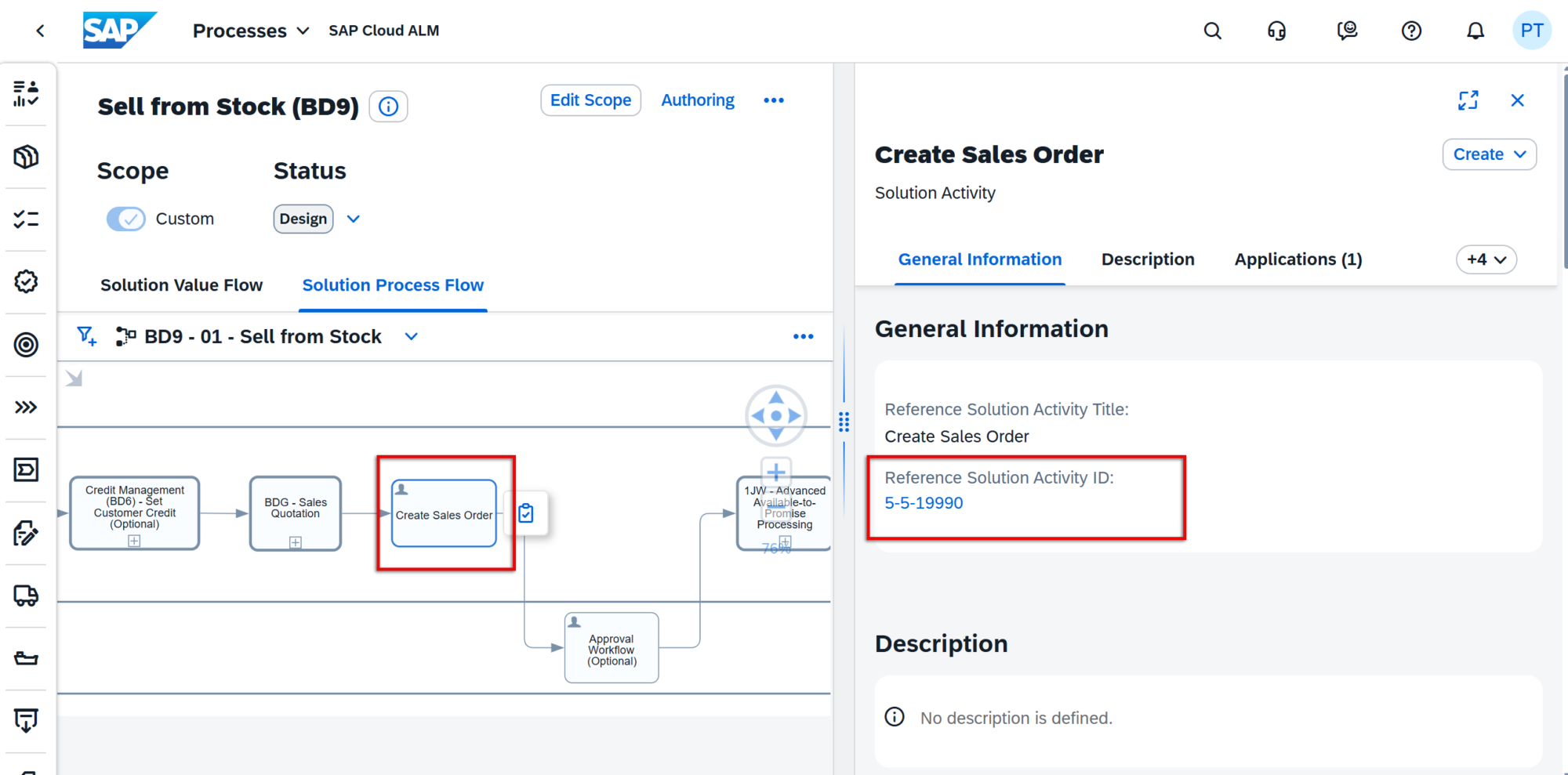
SAP Cloud ALM Process Management now supports the Model Company for Aerospace and Defense solution scenario. With this addition, implementation teams can leverage a ready-to-use, industry-specific reference that reflects best-practice business processes tailored to aerospace and defense organizations. 

By making this model company available in Process Management, SAP Cloud ALM helps teams accelerate process design, align implementations with proven standards, and reduce the effort required to model complex, industry-driven scenarios. This is especially valuable for projects that need a structured starting point while still allowing room for customer-specific adaptations. 

TL;DR: 

Solution scenario Model Company for Aerospace and Defense is now supported in Process Management, providing an industry-specific best-practice foundation for faster and more consistent implementations. 

Improved Filtering Logic in Solution Process Traceability – Analytics 

The Solution Process Traceability app now applies test plan filters consistently across related child artifacts, including test cases, test executions, and defects. This means that when a test plan is selected, only artifacts that truly belong to that plan are shown. 

The result is cleaner traceability views and more accurate test reporting, helping teams focus on relevant data and make better-informed quality decisions. 

TL;DR: 

Test plan filters now cascade to test cases, executions, and defects, improving report accuracy and relevance. 

Separate Columns for Feature and Feature Status – Cross-Project Overview 

In the Transport Analysis app, Feature and Feature Status are now displayed in separate columns, both in the UI and in Excel exports. This structural change makes it easier to sort, group, and filter transports based on feature progress and status. 

For teams working across multiple projects, this improves clarity and supports more precise cross-project analysis. 

TL;DR: 

Feature and Feature Status are now split into separate columns for better filtering, sorting, and reporting. 

Resizable and Movable Cards in the Overview App 

The Overview app now allows cards to be resized and rearranged. Users can adjust card dimensions to display more or less information and move cards to better match their personal workflow. 

This added flexibility helps teams create a workspace that highlights what matters most, without the need to navigate between multiple views. 

TL;DR: 

Overview cards can now be resized and repositioned, making dashboards more flexible and personalized. 

SAP Cloud ALM – What’s New in Week 51

SAP Cloud ALM continues to move forward with updates that emphasize precision, usability, and consistency. The week 51 release introduces data-driven insights in SAP Business Transformation Center, clearer structure in RISE with SAP Methodology, improved identity and landscape management in Administration, and practical productivity enhancements across Implementation and Operations. Together, these updates help teams work more efficiently while maintaining stronger control and transparency across their SAP landscapes.​ 

SAP Business Transformation Center – Data Management

This update expands SAP Business Transformation Center with a stronger focus on data-driven decision-making. By introducing a dedicated Data Management domain, the platform now provides clearer insights into data quality and risks – helping teams prioritize actions, manage transformation complexity, and move ERP data to the cloud with greater confidence. 

New Data Management Domain for Data-Driven Transformations

SAP Business Transformation Center introduces a new Data Management domain, designed to support data-driven SAP ERP cloud transformations. The focus is on delivering actionable insights and data health indicators that help teams manage risks, highlight priorities, and simplify decision-making throughout the transition. 

The new domain is built around three tightly integrated applications: 

  • Manage Data Assessments – Create and manage data assessments per source system and client, forming the foundation for ongoing data quality evaluations. 
  • Manage Runs – Execute and monitor automated quality check runs based on defined assessments. 
  • Analyze Data Quality – Review KPIs, track inconsistencies, and drill down into specific data issues, including guidance on how to resolve them. 

A data assessment is created once and then reused for periodic quality checks. From a single workflow, teams can switch seamlessly between assessment creation, run execution, and detailed analysis, with key parameters carried over automatically. This makes it easier to monitor data quality trends over time and act on issues early. 

By providing transparency into data quality and clear guidance on remediation, the Data Management domain helps reduce migration risks and supports more confident, informed transformation decisions. 

For more information, see Data Management.

TL;DR: 

The new Data Management domain introduces assessments, automated quality runs, and analytics to deliver clear data quality insights – helping teams manage risks and make better decisions during ERP cloud transformations. 

RISE with SAP Methodology – System View

The latest updates in the RISE with SAP Methodology area focus on improving transparency and decision-making around system lifecycle management. By extending System View insights with additional KPIs, teams gain a clearer understanding of upgrade behavior and its impact – supporting better planning and more predictable operations. 

New Software Stack KPIs for Upgrade Planning

The System View dashboard has been enhanced with two new KPI cards under the Overview tab, providing better visibility into system upgrade history and impact:

  • Technical Downtime per Upgrade – Shows the technical downtime associated with past upgrades. 
  • Upgrade History – Displays completed upgrade and update events over time.

Together, these KPIs help teams better understand how often systems are upgraded and how much downtime upgrades typically introduce. This insight supports more informed planning of future upgrades, improved maintenance scheduling, and clearer communication with stakeholders about system availability. 

Restrictions to note: 

In certain scenarios, these cards may appear empty due to technical limitations: 

  • For SAP S/4HANA systems, required historical data may be unavailable, even if lifecycle events (such as conversions or upgrades) have occurred. 
  • For SAP HANA Enterprise Cloud systems without lifecycle events yet, the information may also be unavailable. 

In these cases, no action or support request is required. 

TL;DR: 

Two new System View KPIs – Technical Downtime per Upgrade and Upgrade History – provide better insight into past upgrades and downtime, helping teams plan future upgrades more effectively. 

Operations – Business Process Monitoring, Business Service Management, Configuration & Security Analysis, Integration & Exception Monitoring

The latest updates in the Operations area focus on stronger governance, clearer insights, and easier system lifecycle management. New capabilities enhance access control, improve compliance visibility, refine business and service monitoring, and simplify clean-up activities – helping operations teams maintain control, transparency, and efficiency across their landscapes. 

Access Control for Monitoring Data, Custom Process Enhancements and New KPI for SAP Revenue Growth Management – Business Process Monitoring

Access Control for Monitoring Data 

Access control lists defined in Landscape Management now also apply to Business Process Monitoring. When access control is active, users can only see monitoring data, alerts, and configuration options for the services and systems they are explicitly entitled to. These restrictions apply across the Home, Monitoring, Configuration, and Alerting pages and complement existing access group settings within Business Process Monitoring. 

Custom Process Enhancements 

Working with custom processes is now more efficient and user-friendly. Processes can be copied to speed up configuration, KPI assignment provides additional attributes such as KPI ID and source (standard or custom), and custom process nodes can be pinned to the Home page as favorites for quick access. 

New KPI for SAP Revenue Growth Management 

A new KPI, Promotions Created, is now available for SAP Revenue Growth Management. Once the required setup steps are completed, the KPI is activated automatically. As it’s not part of the standard end-to-end processes, it must be assigned to a custom process to be monitored.

TL;DR: 

Business Process Monitoring now enforces landscape-based access control, offers richer and more reusable custom process handling, and adds a new KPI for SAP Revenue Growth Management – improving security, usability, and business insight. 

Impact Reassessment for Status Events – Business Service Management

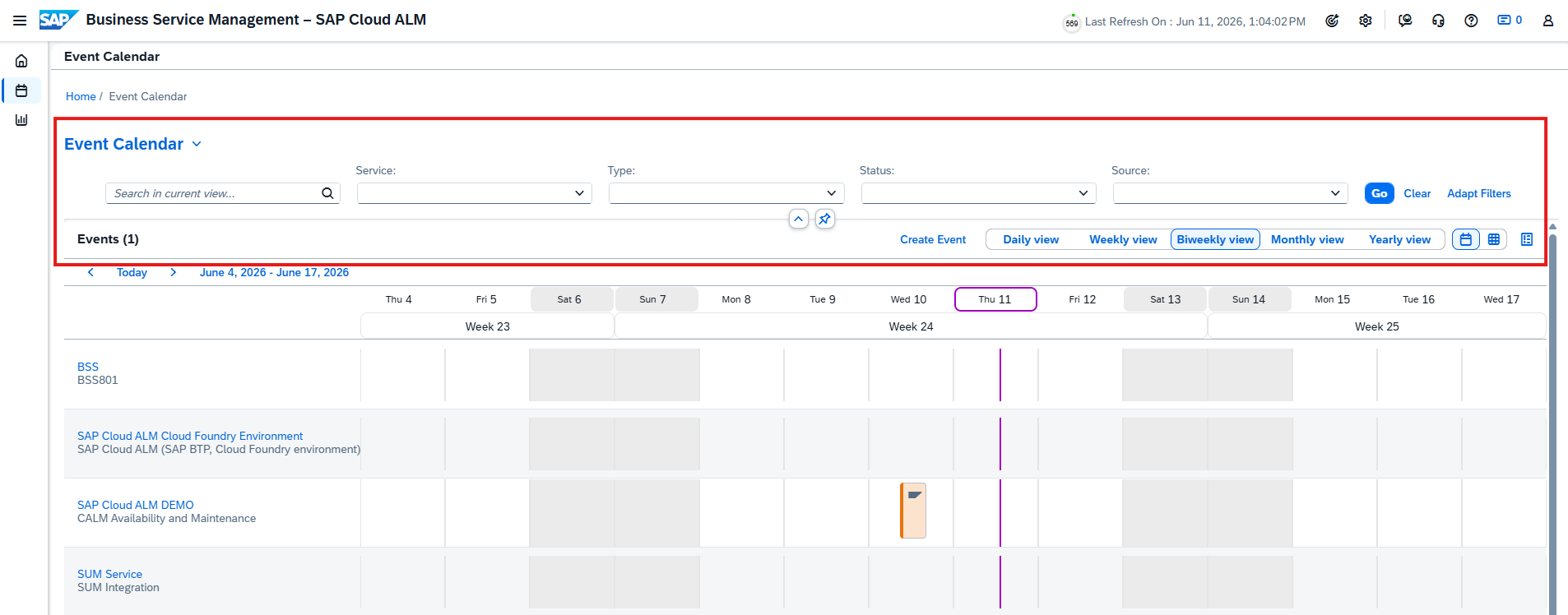
Business Service Management now supports Impact Reassessment directly in the Event Calendar. This enhancement allows teams to reassess the impact of status events – such as disruptions or degradations – after detection and resolution, especially in cases where events were identified as false positives and notifications can no longer be changed. 

With impact reassessment, additional context can be documented in a text field, and the reassessment is treated as a status update for the event. Once updated, the changes are reflected consistently across the system, including the event’s end time, overview cards, the Event Calendar or tabular views, and the action logs. Any configured event actions are also triggered based on the updated information. 

TL;DR: 

Impact Reassessment enables teams to correct and document false-positive status events, with updates automatically reflected across calendars, dashboards, logs, and event actions. 

Enhanced Compliance Visibility and Check Transparency – Configuration & Security Analysis

Configuration & Security Analysis now provides clearer, more actionable insights into compliance status across both Data Stores and Validation. 

In the Configuration & Security Analysis – Data Stores app, overview cards now include Check Results and an overall Compliance Score, sourced directly from the Validation app. This gives teams an at-a-glance understanding of how services and systems align with SAP security recommendations. The new metrics are also factored into the card color calculation, making compliance issues immediately visible. From the overview, users can jump straight to the relevant check results in the Validation app for deeper analysis.

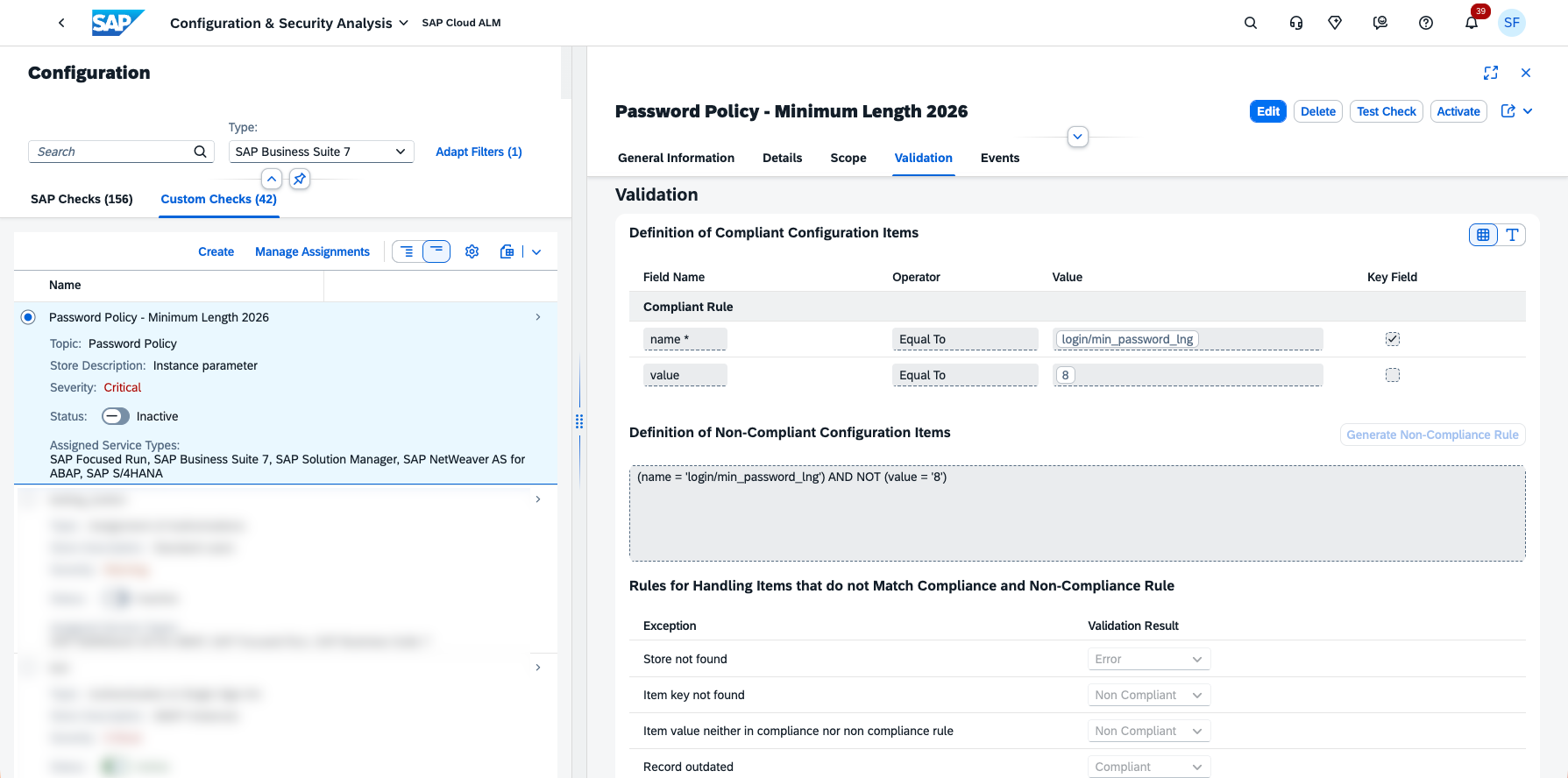
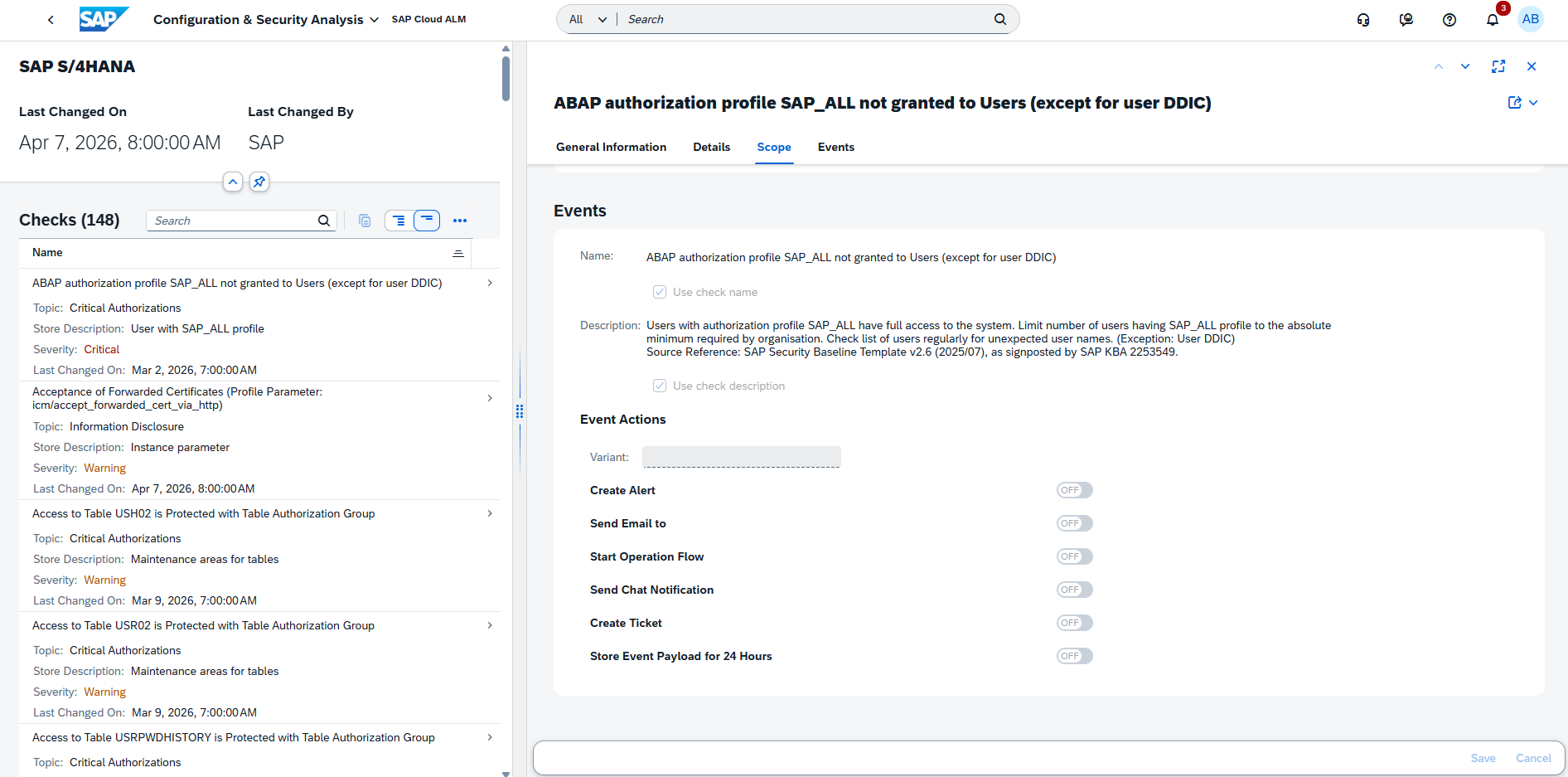
At the same time, the Configuration & Security Analysis – Validation app now offers richer detail for each check result. Selecting an entry in the Check Results table opens a side panel with comprehensive information, including the check description, severity, related store and topic, and runtime context such as affected systems, configuration items, and values. Warnings and critical findings are clearly highlighted to support faster remediation.

TL;DR: 

Compliance status is now visible directly on overview cards, and detailed check insights are available in Validation – making it easier to spot issues quickly and understand exactly what needs attention. 

Central Clean-Up for Integration & Exception Monitoring

A new clean-up option is now available for Integration & Exception Monitoring directly from the Landscape Management app. Using the Clean-Up action, administrators can remove both configuration and collected monitoring data for a specific service or system in a single step. 

This option is available in the Actions column under Services/Systems à Supported Use Cases in Landscape Management. Once executed, the configuration for Integration & Exception Monitoring is deleted, all related monitoring data is removed, and the service or system is reset to a Not Configured state.

This enhancement simplifies lifecycle management, making it easier to retire systems, reset configurations, or clean up obsolete monitoring data without navigating multiple apps. 

TL;DR: 

Integration & Exception Monitoring configurations and data can now be centrally removed via Landscape Management, resetting services or systems to a clean, unconfigured state. 

Implementation – Retrofit, Features, Requirements, Test Execution, Test Preparation

The latest updates in the Implementation area focus on improving structure, traceability, and efficiency across projects. From stronger support for retrofitting and AI-assisted requirements, to enhanced testing, document handling, and project organization, these enhancements help teams work more consistently, reduce manual effort, and maintain better control throughout the implementation lifecycle. 

New app: Retrofit

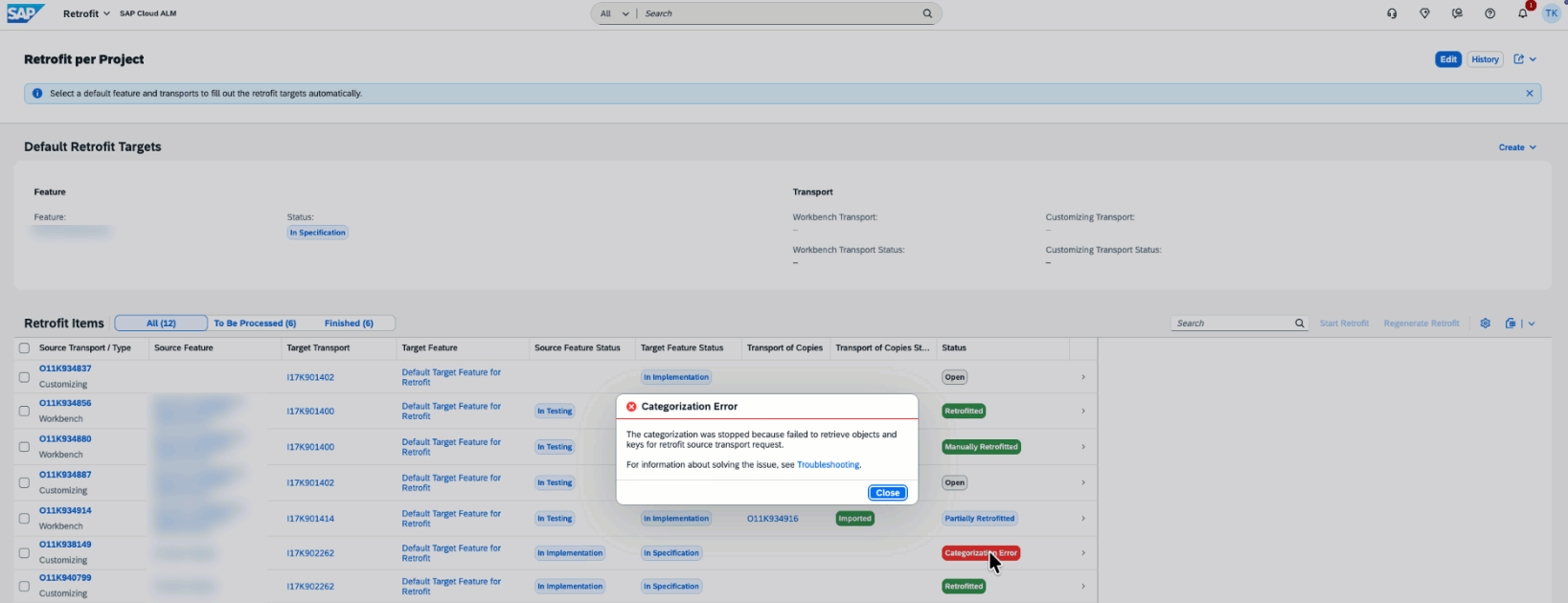
A new Retrofit app is now available in SAP Cloud ALM, designed to support dual-track (n+1) development landscapes. The app enables the synchronization of changed objects – both customizing and workbench – from a maintenance development system into an implementation development system, helping teams keep parallel tracks aligned.

Retrofit is especially valuable in landscapes where maintenance and innovation run in parallel. Instead of manually moving transport requests between systems, the app detects differences automatically and supports controlled synchronization, including conflict detection when the same object has been changed in both tracks. This reduces risk, avoids overwriting changes unintentionally, and improves transparency in complex release scenarios. 

Currently, the Retrofit app supports CTS-managed landscapes and provides a structured way to manage ongoing maintenance fixes alongside new project developments – ensuring that system versions stay consistent over time without slowing down delivery. 

TL;DR: 

The new Retrofit app simplifies synchronization between maintenance and project systems in dual-track landscapes, helping teams manage parallel changes, detect conflicts, and keep releases aligned. 

Retrofit Integration in Transports – Features

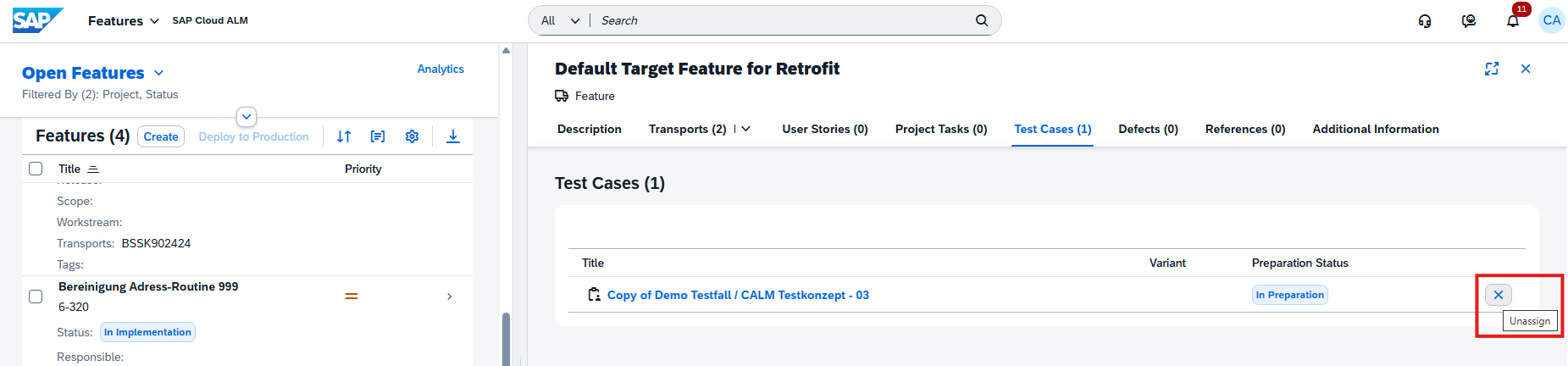
Retrofit capabilities are integrated directly into the Features, making it easier to track retrofit relevance without leaving your current context. In the Transports section, a new Retrofit Status column shows the retrofit status of source transports. 

The status values are aligned with those in the Retrofit app and include an additional Not Applicable status for transports that don’t require retrofitting. This gives teams immediate visibility into whether a transport needs attention, helping them manage dual-track landscapes more efficiently. 

If retrofit isn’t configured for the landscape, the Retrofit Status column is hidden, keeping the interface clean and relevant. For users with the required authorizations, the header also provides a direct navigation link to the Retrofit app, allowing quick follow-up and deeper analysis when needed.

TL;DR: 

Retrofit status is visible directly in the Transports view, giving instant insight into which transports require retrofitting and enabling quick navigation to the Retrofit app. 

Smarter Requirement Creation and Reuse – Requirements

Two new enhancements in the Requirements area make it easier to create and manage requirements across projects, reducing manual effort while improving reuse and consistency. 

AI-Assisted Requirement Generation 

SAP Cloud ALM now supports AI-generated requirements based on existing project context. The AI uses inputs such as Fit-to-Standard workshop transcripts, solution processes, and related project documents to propose requirement content. This helps teams accelerate requirement creation, ensure better alignment with documented discussions, and reduce the risk of missing key points early in the project lifecycle. 

Move Requirements Between Projects 

Requirements can now be moved from one project to another. This is especially useful when scopes change, projects are restructured, or requirements need to be reused across initiatives. Instead of recreating content, teams can simply transfer existing requirements and continue working without losing history or context.

TL;DR: 

Create requirements faster with AI-generated content based on project documents, and move requirements between projects to support reuse and changing scopes. 

Enhanced Test Preparation and Execution with Evidence Support

Several improvements across Test Preparation and Test Execution make manual testing more structured, traceable, and audit-ready. During test preparation, test designers can now define which test actions require testers to provide screenshots as evidence during execution. This ensures a clear and verifiable record of what was tested and the actual results for critical steps.

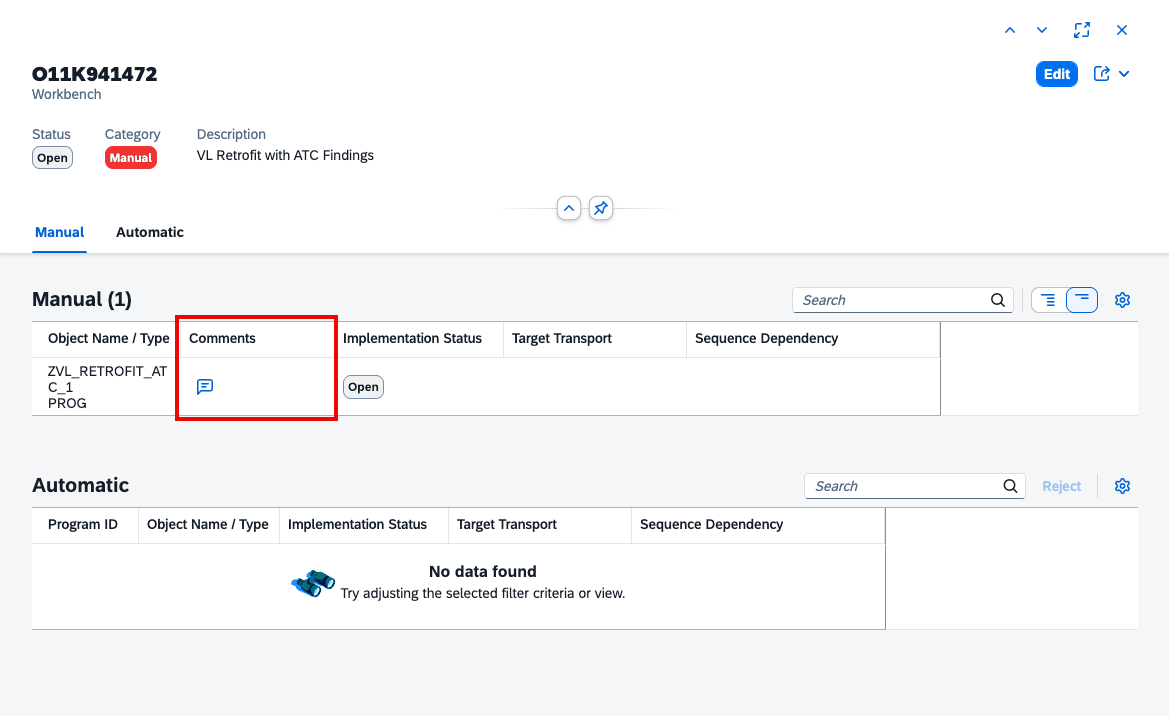
On the execution side, this evidence concept is now fully enforced. For manual test cases, testers are required to upload screenshots for actions where evidence is mandatory, while still being able to add screenshots optionally for other actions. This new evidence handling replaces the former Comments field, providing a more consistent and outcome-focused way to document test results.

In addition, the generation of manual test cases from solution process flow diagrams has been refined. The activity sequence now more closely matches the order of solution activities in the diagram, reducing manual rework and making test cases easier to follow. Test cases can also be linked directly to relevant project documents, ensuring testers have the necessary context and guidance at hand during preparation and execution.

TL;DR: 

Define mandatory screenshot evidence in test preparation, enforce evidence capture during test execution, benefit from improved activity sequencing, and link relevant documents to test cases for clearer, more reliable manual testing. 

Administration – Landscape Management

The latest enhancements in the Administration area focus on improving system maintainability and clarity. Updates in Landscape Management help optimize memory usage while also making it easier to clearly identify cloud service tenants – supporting administrators in keeping landscapes clean, compliant, and easy to manage. 

Action Log Housekeeping for Memory Optimization

To reduce unnecessary data growth, SAP Cloud ALM now automatically cleans up Landscape Object–related action logs that are older than 90 days. This housekeeping runs in the background and helps optimize memory usage without manual effort from administrators. 

Importantly, logs that are required for security purposes (such as Access Control) or legal reasons (for example, data transfer consent) are excluded from deletion and are retained indefinitely. 

TL;DR: 

Old landscape action logs are automatically cleaned up after 90 days, improving memory usage while keeping security- and compliance-relevant logs intact. 

Enhanced Tenant Identification for Cloud Services

Identifying cloud service tenants is now clearer thanks to enhanced default descriptions in Landscape Management. For service types where tenant names alone aren’t sufficient, SAP Cloud ALM automatically enriches the description with an additional identifying attribute – such as the sub-account display name. 

This enhancement is currently supported for: 

  • SAP HANA Cloud – Sub-account display name 
  • SAP Market Communication for Utilities – Sub-account display name 
  • Identity Provisioning – External tenant name 

By making tenants easier to distinguish immediately, this update reduces ambiguity and simplifies landscape administration.

TL;DR: 

Cloud service tenants are now easier to identify with enriched default descriptions, reducing confusion in complex landscapes.

Service – Issues and Actions Management

The latest update in the Service area further refines how issues and actions can be analyzed and filtered. With enhanced search options in Issues and Actions Management, service teams gain better visibility into responsibilities and communication touchpoints – making follow-ups more precise and service collaboration more efficient.

Enhanced Service Object Filter by Customer Contact

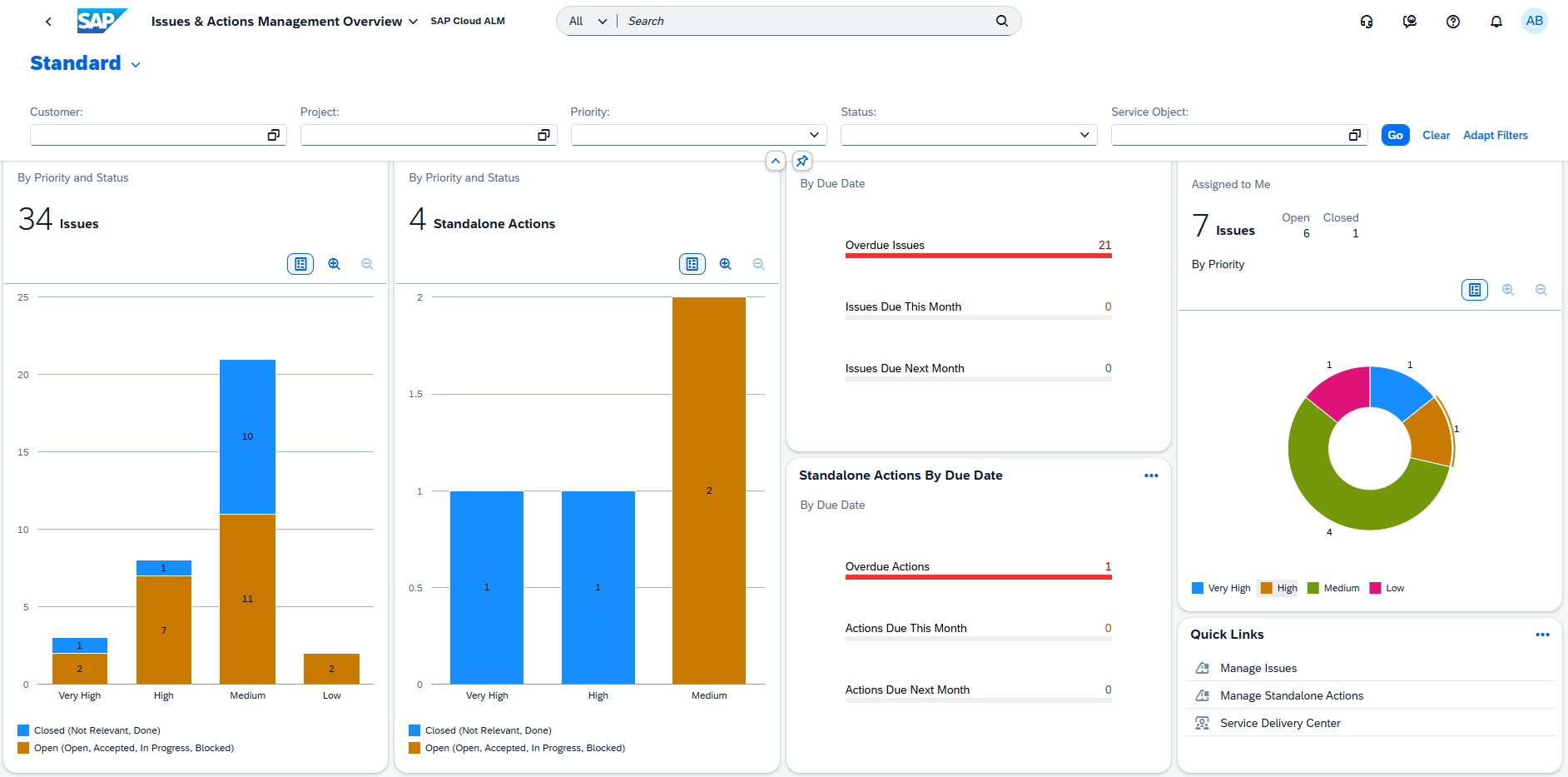
The Issues and Actions Overview page now offers an enhanced Service Object filter that allows teams to search for issues and standalone actions by Customer Contact. This refinement makes it easier to narrow down items related to specific customer stakeholders, improving traceability and follow-up in service delivery scenarios. 

By enabling filtering based on customer contact details, service teams can more quickly identify relevant issues, streamline communication, and ensure that customer-related actions are handled efficiently and transparently.

TL;DR: 

Filter issues and actions by Customer Contact to refine searches and improve visibility in service-related follow-ups.